

The SSPX Is Heading to Schism — Catholics Need to Stop Playing Dumb
The SSPX Plans to Consecrate Bishops Without Rome's Approval on July 1. Why are Some Catholics Cheering for the Wrong Side?
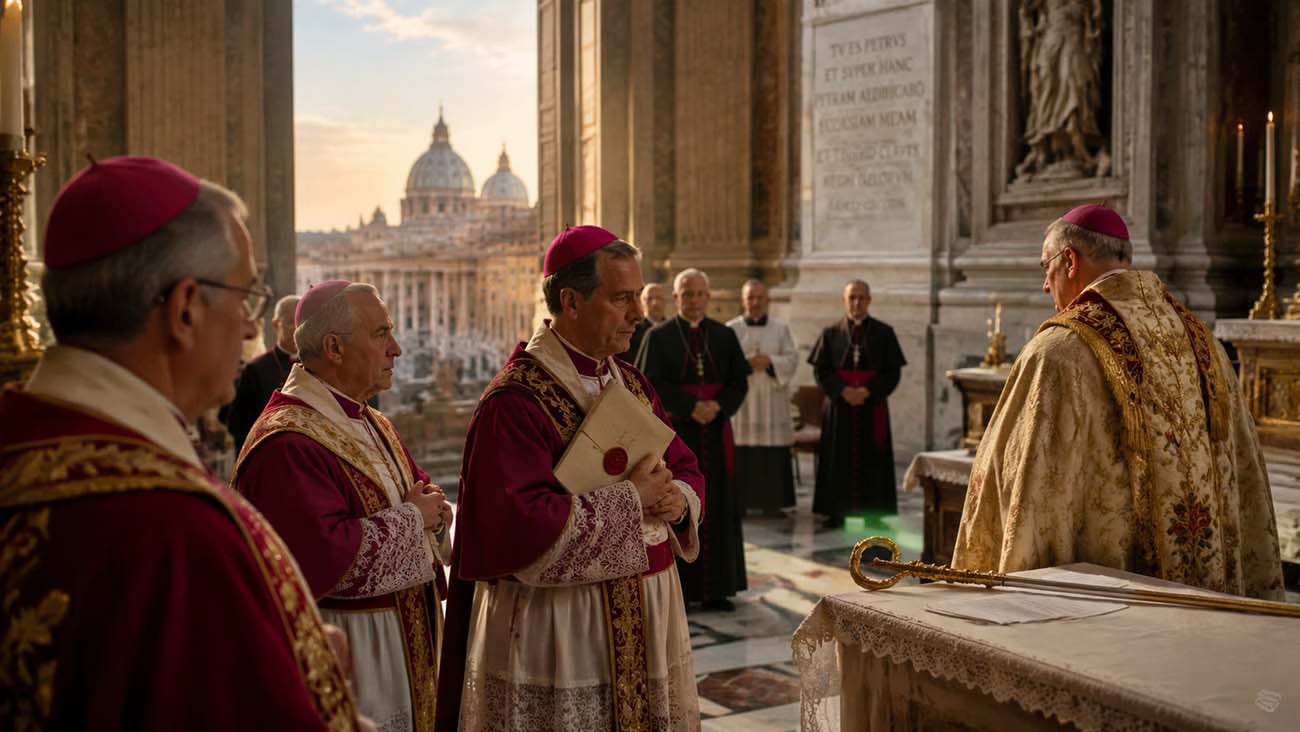
The SSPX is planning to consecrate new bishops on July 1 without a papal mandate— the same move that got them excommunicated in 1988. Rome offered dialogue. They said no. The showdown is coming upon us!
This has happened before. In 1988, Archbishop Marcel Lefebvre—a French archbishop who had founded the SSPX in 1970 as a traditionalist seminary society in response to what he saw as the errors of Vatican II—consecrated four bishops without papal approval and against the express prohibition of Pope John Paul II. Rome called it schism, excommunications followed. It took twenty years and Pope Benedict’s intervention to begin unwinding that damage.
Now the SSPX is lining up to do it again. July 1. New bishops. No papal mandate (the canonical term for a specific authorization from the pope).
The announcement got Rome’s attention fast. Cardinal Fernández, the doctrine watchdog of the Church, summoned SSPX Superior General Fr. Davide Pagliarani to the Vatican. “Rome offered a path forward, but it would require a compromise from the SSPX. Cardinal Fernández summoned Pagliarani to the Vatican, and they met on February 12. If the SSPX agreed to postpone the July 1 consecrations, Rome was prepared to open renewed theological dialogue aimed at identifying the conditions for full communion. Six days later, on February 18, Ash Wednesday, Pagliarani’s rejection letter arrived.”
Ash Wednesday. It’s either ironic or fitting depending on how you look at it. The Vatican’s response was unambiguous and unusually bold: proceeding without a papal mandate would constitute a “decisive rupture of ecclesial communion” (schism) with “grave consequences” for the society.
Under canon law, any bishop who consecrates without a papal mandate, and any bishop who receives that consecration, incurs automatic excommunication. No trial, no process. The act itself triggers the penalty.
The SSPX asserts they’re not in schism because they still believe everything the Church teaches. But that’s not how authority works. You don’t get to claim fidelity to the Church while openly defying the pope on a matter of ecclesial governance.
Here’s what frustrates me about this: there is a large segment of faithful, orthodox Catholics who have a soft spot for the SSPX. Some attend their Masses. Some read their publications. Some flagrantly cheer them on as a counterweight to the chaos in the broader Church. I understand that, I really do. But cheering for the SSPX right now isn’t cheering for tradition, it’s cheering for a group that’s about to fracture the Church.
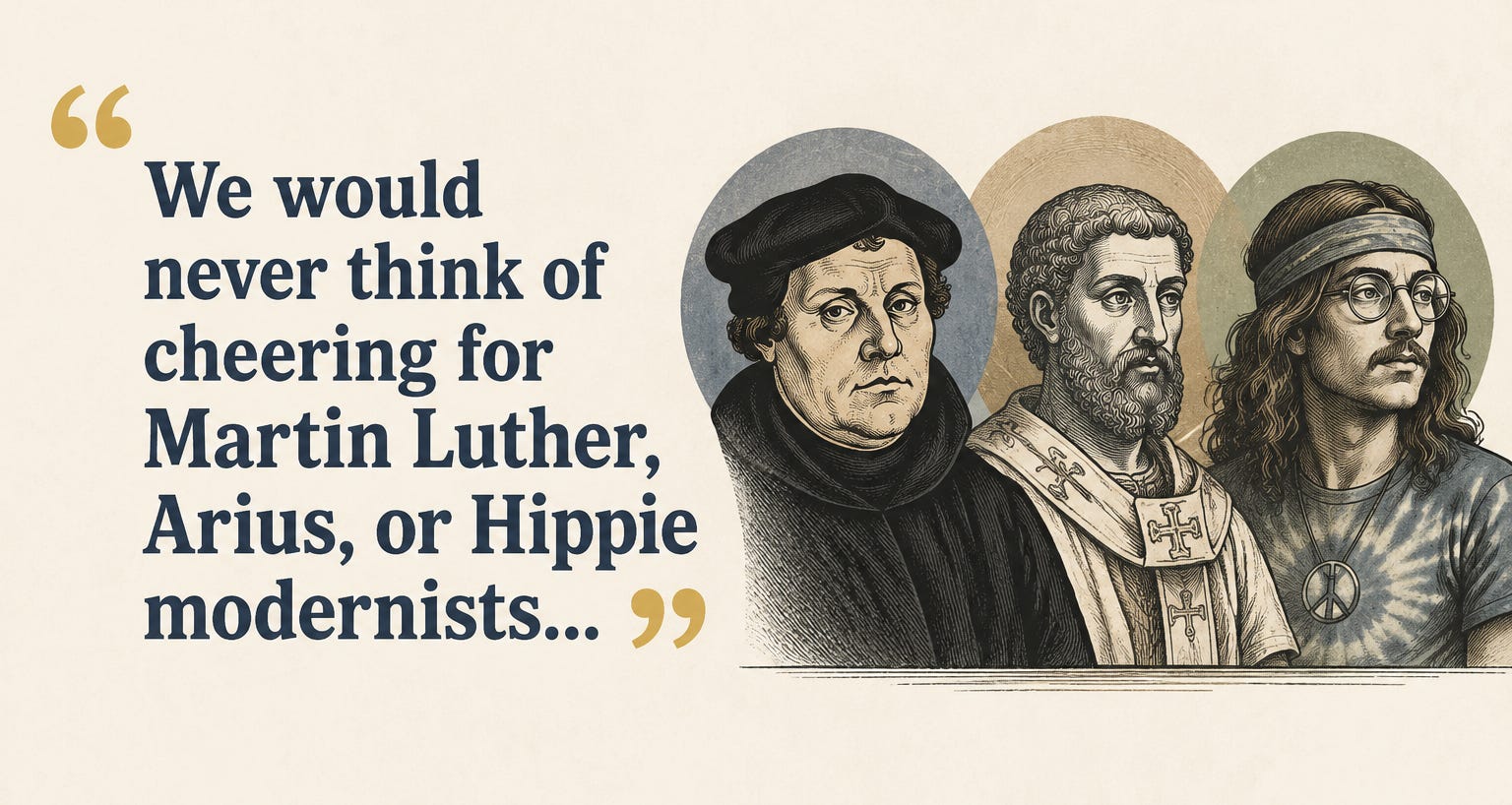
We would never think of cheering for Martin Luther, we would never think of cheering for Arias, and we would never think of cheering for 1970s modernists. It doesn’t matter that Luther was wrong, that Arias was teaching heresy, or that the 1970s hippies were modernists. What they have in common that most deserves focus is this: They were each fracturing or attempting to fracture the Church.
Many people were on their side in each of those eras of Church history. We look back on it all now and see the error. It will be no different when we look back on this SSPX drama. The society is wrong. Their theological position is wrong, and their disobedience is wrong. A love for tradition should not make that pill easy to swallow. Poison that is sweet will still kill you, and it will still harm the mystical body of Christ.
Some things in the Church are frustrating and people are looking for a champion to set it all straight. But folks have to remember that’s what the Holy Spirit does. It’s His job. And he does that through people and through the Church’s mechanisms, but no tin a way that circumvents order and authority.
The SSPX is not a band of heroic resisters. They are a group that has spent decades operating outside of communion with Rome while insisting that’s not what they’re doing. July is coming. Either they pull back or they repeat 1988. Catholics who care about unity need to say that clearly, not after the fact but now.
"Here’s what frustrates me about this: there is a large segment of faithful, orthodox Catholics who have a soft spot for the SSPX. Some attend their Masses. Some read their publications. Some quietly cheer them on as a counterweight to the chaos in the broader Church."
This tendency to just overlook regular attendance at SSPX chapels, particularly when the FSSP exists drives me a little batty too. I'm sorry, I don't have a lot of patience for someone who is probably driving at least 45 minutes, if not over an hour, past all sorts of Catholic parishes to attend those Masses.
Schism does matter, because it's about a lack of all three virtues: faith, hope, and charity. If you are a faithful Catholic, the bar is FSSP, not SSPX, even if you don't have any Missal of 1962 Mass convenient. I don't want to read materials from them. What materials I've seen mostly amount to uncharitable and pedantic rants.
"We would never think of cheering for Martin Luther, we would never think of cheering for Arias, and we would never think of cheering for 1970s modernists. "
The other 1970's modernist archetype was Archbishop Lefebvre. There's no meaningful difference between a cafeteria Catholic who will throw a fit if they don't get "Gather Us In" in flip flops versus a cafeteria Catholic who will throw fit if they don't ad orientum for 90 minutes in a language they probably don't understand. One party only has better taste. It's the same rebellion inverted.
I will blow mental gaskets when I claim traditionalism = a different form of modernism, but it's true. Vatican I and II were councils aimed directly at modernism. What do traditionalists and hippie/progressives reject? Vatican I and II.
It's this decision moments that will show who truly loves the faith and who just goes with radicalism because it is "based."