

When 'Church' Bells Stop Ringing
Secular habits are thinning vocations across the West—but abandoning the Church’s schools, abbeys, and seminaries today may cost us the renewal we will need tomorrow.
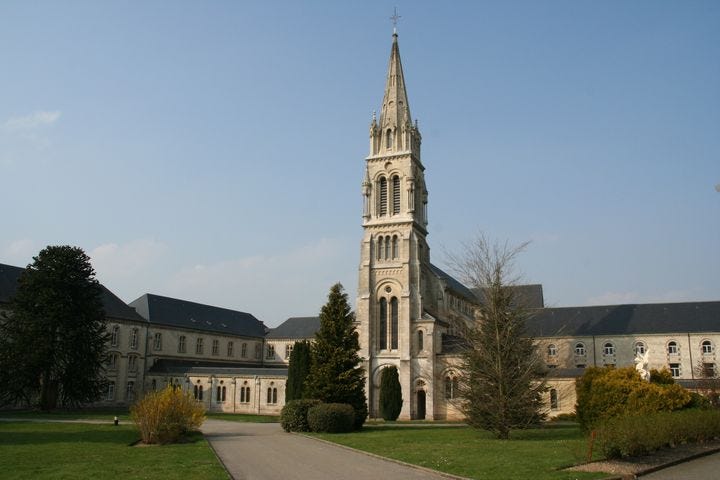
News out of Normandy feels like the tolling of a bell across the whole West. After nearly nine centuries, the Trappists of Our Lady of La Trappe are considering leaving their historic abbey because of too few vocations and the growing burden of maintaining the property. Bishop Robert Barron called it a sign of “an ideological secularism that is rotting the soul of the West,”
As hard as that may be for all of us to admit (or to hear) it’s difficult to say he’s wrong. What we’re seeing today is more of a system of problems than a difficulty in finding the best apples to pick from the tree.


A monastery doesn’t die in a day. Neither do schools close, or seminaries empty inside of a generation. Long before any of that happens, something deeper has already been thinning out in the culture around it.
Vocations do not disappear merely because a few young men fail to hear—or respond to—God’s call. They disappear because generation after generation has been formed in a world where God is treated as an accessory rather than the axis of life and “being”. Religion becomes like furniture in the house: still there, but movable, secondary, easy to neglect and easy to replace.
That’s where the crisis is. Most young men and women who would ordinarily consider a call to a vocation have been raised in a moral and spiritual atmosphere shaped less by the Church or Catholic culture, and more by the habits and culture of secular life.
For them, Sunday Mass is negotiable. Prayer is occasional. Penance feels foreign or archaic and unnecessary. Fasting is a burden almost too strange to contemplate. The Faith remains present enough to be recognized, but not forceful enough to take hold, or to command our intrigue. Under those conditions, religious life doesn’t simply look difficult. It looks unintelligible.
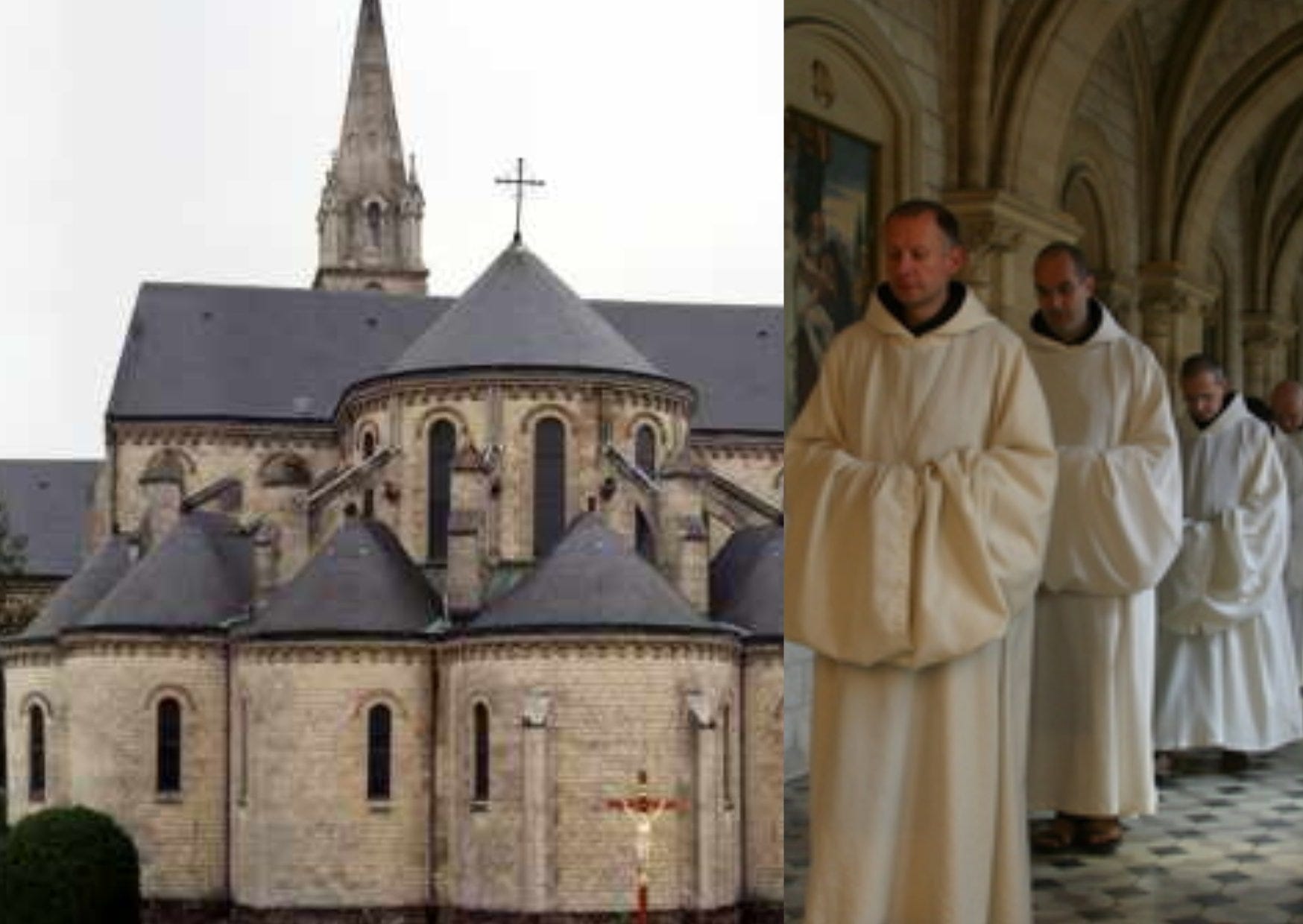
A vocation is not sustained by one’s personality alone, but by a whole pattern of life. The cloister, the seminary, the convent, the abbey—they don’t just require good intentions, they require souls/persons conditioned to understand sacrifice as normal, silence as fruitful, obedience as liberating, and worship as the center around which everything else turns. We can’t form men and women in their vocations if we aren’t first conditioning them to respond to the call.
So yes, ideological secularism is part of the story. But secularism is not only an idea floating in the air. It becomes habit. It settles into family routines, school priorities, weekend schedules, expectations, appetites, and reflexes. It trains people to ignore God. That may be even more deadly.
Another danger in all this: panic-driven liquidation. When the Church passes through a season of weakness, there is always the temptation to sell, consolidate, abandon, and offload what previous generations built at great sacrifice. Sometimes prudence requires hard decisions. Not every building can be saved at any cost. But we should be very slow to surrender the material inheritance of the Church as though the future will simply never need it again. It costs a lot of money to open or re-open a school, or to build a new building. The likelihood of a diocese or religious order making that investment later is slim, while the temptation to close a school and sell the building for money that will possibly just be squandered in the end is great.
History doesn’t move in straight lines. Civilizations and cultures cool and then flare again. The Church declines in one age and rises in another. None of this is news. The monasteries, schools, seminaries, convents, and churches we are tempted to treat as relics may yet prove to be the foundations of a renewal not far off.
A little bit side topic, but I learned yesterday from a priest how much the parish (and the adjoining Catholic school) pay in property taxes each month. It is substantial. An uphill battle every month for this little parish in a community that is stable but older.
I don’t know if there are practical solutions to this property tax issue but it is one of the factors at play in the overall problem.
Yet vocations at the "schismatic" SSPX are booming?
Could it be that tradition and reverence trumps modernism and felt banners?