

Vatican II Mythology: Show Notes (Ep. 43)
Show notes from episode 43 of Fire Branded - "3 Big Lies about Vatican II"
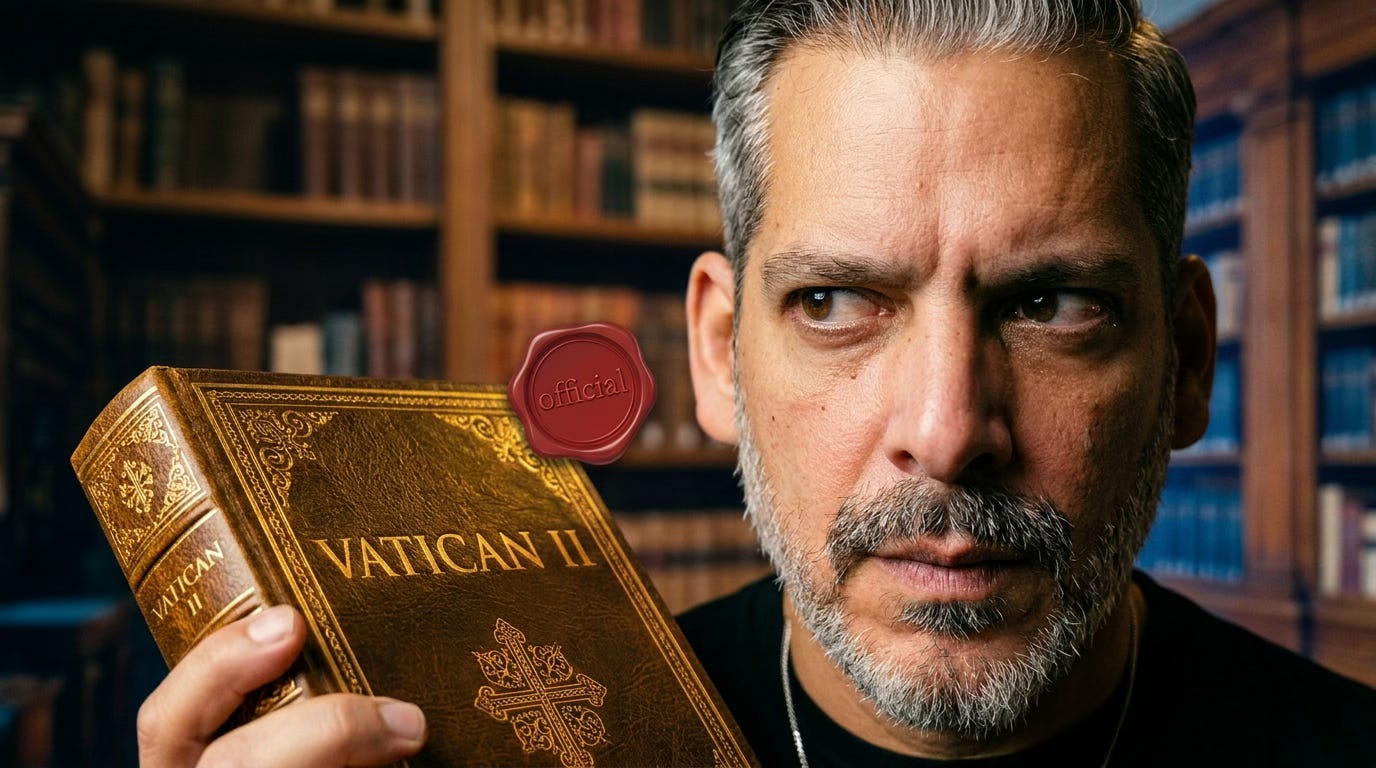
In this episode of Fire Branded, I broke down three of the most common myths about the Second Vatican Council. Drawing from personal experience—including a period when even I opposed the council— I explain why many popular criticisms collapse once the documents are actually examined.
The episode also separates cultural changes that happened around Vatican II from what the council actually taught—and why so many Catholics confidently repeat claims about the council without ever reading it.
🔊 FULL EPISODE: The Forge | YouTube | Available soon on other networks
Episode Breakdown
The Setup: Why Vatican II Is So Easy to Attack
Before getting into the myths themselves, the episode explains why Vatican II is such an easy target in Catholic discussions. Many criticisms begin with a misunderstanding about the relationship between the council and the cultural upheaval that followed.
Many Catholics assume the Church dramatically changed after the council.
Because the timing overlaps, people assume Vatican II caused the change.
But the same cultural upheaval affected Protestant churches and secular society.
Key point: the council happened during a cultural revolution—it didn’t create it.
Personal Context: Why This Matters
I explain why I can talk about Vatican II with so much confidence. My perspective comes from personal experience with the arguments commonly used against the council.
I once strongly opposed Vatican II.
I was nearly pulled into sedevacantism.
At one point I realized something important: I had never actually read the council documents.
That discovery forced me to investigate the council for himself.
The Three Myths
The core of the episode addresses three claims that frequently appear in online debates and traditionalist critiques. Each myth sounds persuasive on the surface but collapses once the council’s authority and context are understood.
Myth #1 — “Vatican II Was Only Pastoral”
This claim is often used to dismiss the council’s authority altogether. The episode explains why describing Vatican II as “pastoral” does not mean it lacks magisterial authority.
Vatican II was an ecumenical council.
Its teachings belong to the Church’s magisterium.
Catholics owe religious submission of intellect and will to its teaching.
The pastoral language of the documents describes how the council presented doctrine, not whether the council has authority.
Myth #2 — “Vatican II Created New Doctrine”
Another widespread claim is that the council invented new teachings or altered Catholic doctrine. The episode explains why this accusation misunderstands what Vatican II actually did.
Vatican II defined no new dogmas.
It did not overturn prior teaching.
It expressed the Church’s teaching in a different style and vocabulary.
Myth #3 — “Vatican II Was a Rupture from Tradition”
Perhaps the most serious accusation is that the council broke with the Church’s historic tradition. I explain why this claim is commonly repeated but never supported with concrete examples.
The claim is widely repeated but rarely substantiated.
Critics often cannot identify an actual doctrinal rupture.
The council ultimately stands within the Church’s continuity of teaching.
Additional Points From the Episode
The Real Cause of the Cultural Shift
The episode also looks at the broader historical context surrounding Vatican II. Major cultural changes were already underway in the Western world long before the council concluded.
Post–World War II cultural transformation
Changes in music, media, and social norms
The sexual revolution and new attitudes toward morality
The Church experienced these pressures because the people inside the Church experienced them.
A Word About Reading the Documents
A recurring theme in the episode is how few critics have actually read the council itself. I challenge listeners to examine the documents firsthand instead of relying on second‑hand interpretations.
Many people speak strongly about Vatican II.
Very few have actually read it.
Listeners are encouraged to examine the council themselves.
Referenced Topics
The conversation touches on several related theological and historical issues connected to the council.
Authority of ecumenical councils
Cultural upheaval in the 1950s–1970s
Sedevacantism and radical traditionalism
Continuity of doctrine in Vatican II
Misinterpretations of council language
Listen to the full episode of Fire Branded wherever you get your podcasts.