


2-minute video clip from episode, God’s Mercy is Power
We have a bad habit of confusing mercy with leniency.
Sometimes when we talk about God’s mercy, what we really mean is that maybe sin doesn’t matter that much. Maybe God just “lets it slide.” Maybe He shrugs at our failures and moves on.
But that’s not mercy, it’s indifference. And a God who is indifferent is a God who is loveless, and can’t be the God we’re told about in the scriptures.
Mercy is not God pretending sin is insignificant. It is not God erasing justice. And it is certainly not God rewriting the Truth. Truth matters, which is why Justice is real. Justice matters which is why Mercy is offered to us. So where’s the balance?
“God did not lower the bar. He met it Himself”
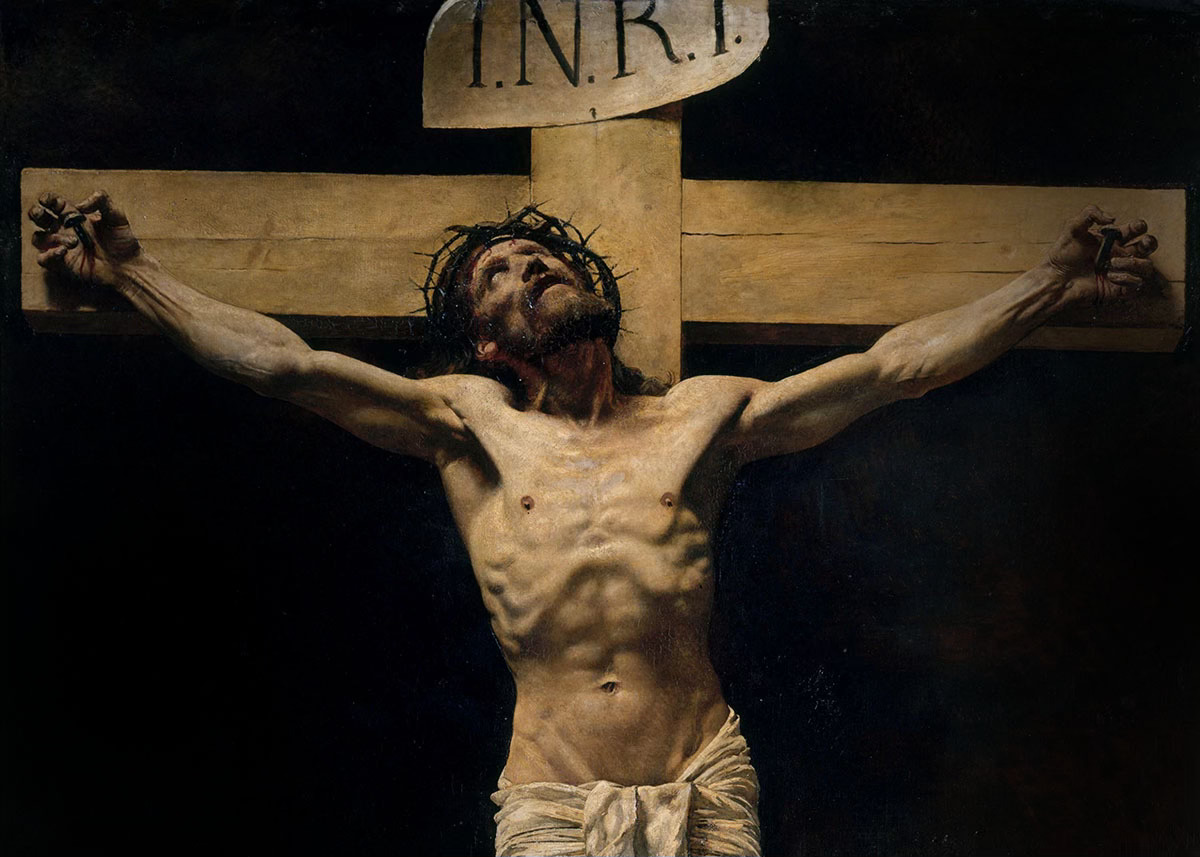
Mercy is God restoring the sinner without rewriting the Truth. The justice is real. It’s the Cross. We should have been on that Cross, so to speak—but Christ took our place. He paid the debt that we owed for our sins. God did not lower the bar. He met it Himself
And when God forgives, He doesn’t forgive the way we forgive others. Our forgiveness is often emotional or psychological. It doesn’t really do anything.
But God’s forgiveness is an action. It heals and restores a soul, and makes us whole in ways we don’t see but in ways that are real. God’s mercy is an action, because love is an action. And divine mercy acts at the cost of Calvary.
St. Augustine reminds us that mercy never denies justice.
“God’s mercy does not abolish His justice, but is fulfilled in it.”
This echos what I said in the video segment above; the cross of Christ is “the justice”. Augustine’s insight makes clear what the Cross shows us: mercy is not the cancellation of justice, but its fulfillment. In the video, we see that justice is not ignored—it is satisfied in Christ.
St. Thomas Aquinas clarifies that mercy is not weakness.
“Mercy without justice is the mother of dissolution; justice without mercy is cruelty.”
— Summa Theologiae, II-II, q. 30, a. 4
Aquinas helps us avoid both errors. God does not dissolve the moral law in mercy, nor does He crush us with justice. In the Cross, both meet perfectly.
St. John Paul II speaks of mercy as restorative.
“Mercy is love’s second name.”
— Dives in Misericordia, 7
When God forgives, He does not merely overlook. He loves into wholeness. That’s what the video is pointing to: mercy heals; it restores; it elevates at the cost of Christ’s blood.
St. Leo the Great points us to the cost of our redemption.
“The blood of Christ is the price of the whole world.”
That is where the justice is. That is where the mercy is. Not in minimizing sin—but in the Son of God paying for it.
So let’s stop imagining mercy as God lowering the bar. Sin put Jesus on the Cross. The Cross cancels sin—if we repent and unite ourselves to it. That requires that we keep trying, and trying again; go to confession, receive the sacraments, and so on. That’s how we make ourselves vulnerable to the blood of the lamb, as I put it. We make ourselves receptive to the graces and mercy he won for us.
God did not lower the truth or cheapen sin. He did not reduce Himself.
He elevated you.
Member discussion