

Is the Iran War Just?
Here is Augustine's Just War Theory applied, not just talked about
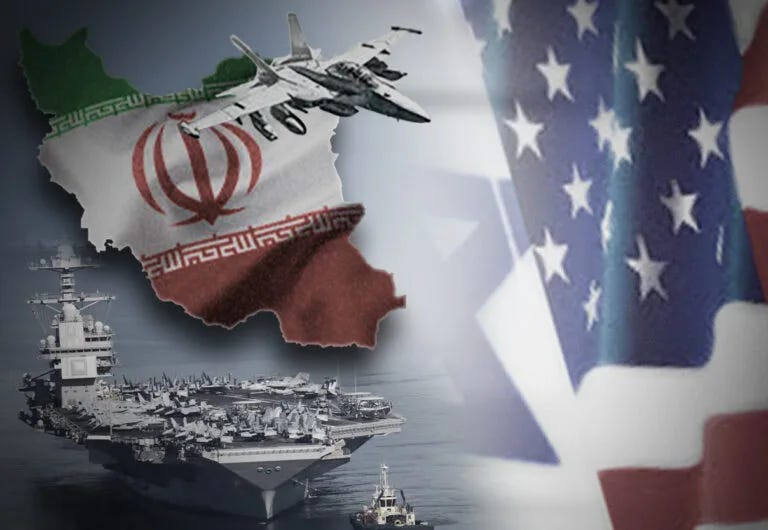
Archbishop Timothy Broglio, former president of the USCCB, said this week on CBS News’ Face the Nation that it was hard to see how the ongoing U.S.-Iran war could be justified under just war theory. He acknowledged that military intelligence may hold information the public doesn’t have access to—but that even accounting for that, it was hard to see how the war could be justified.
During that interview, just war theory was brought up—specifically in reference to Augustine. And this is where I think a lot of commentary, not just in secular media but even in Catholic spaces, starts to go off the rails. The theory gets invoked, but not really applied. It’s used rhetorically rather than theologically.
That’s a major fail for me. Because just war theory isn’t a slogan that you cite to validate a position you already hold. It’s a framework that requires careful reasoning, full context, and intellectual discipline. And in this case, most of what I’m seeing falls short of that.
Just War Theory Applied
Diplomacy, and War as a Last Resort
Just war theory requires that war be a last resort. Commentators and those interviewed by news outlets say, “We need diplomacy!” But isn’t almost 50 years of diplomacy enough? It could be argued that we’ve been trying diplomacy for decades, and most clearly across the last three presidential administrations. It hasn’t resulted in improved relations with Iran, or a more tranquil, peace-loving Iran. Iran has only grown bolder, more influential, and more flagrant in its pursuit of building a nuclear weapon, and building an arsenal meant to end life, not defend it. It has also increased—by a wide margin—its influence and material support for proxy terror networks like Hezbollah.
I agree that we always need diplomacy, but when do we acknowledge that diplomacy has only amounted to placating a hostile regime, and allowed it to buy time to develop its arsenal and to increase its malignant influence in the region?
I don’t know that we reached the end of the line for diplomacy. Maybe we haven’t. But the facts demand that we at least consider that possibility. War should be a last resort. But maybe that’s exactly what this war is—a last resort after decades of diplomacy have ultimately failed.
Right Intention
Even if diplomacy has reached its fail point, how exactly do we determine that? By an act of aggression from Iran? A refusal to come to the table? What was it that led to the U.S. and Israel to bring diplomacy to an end, and launch airstrikes on Iran now rather than later (or ever)?
What did American and Israeli intelligence know about Iran’s war posture that we aren’t being told? Was Iran preparing to strike? Was something more going on?
It’s possible there was intel that we aren’t hearing, in the interests of national security, to protect foreign intel assets, including those deeply embedded in the regime and its framework. It could be that there were credible threats of hostility made by the regime, or admissions of their nuclear capabilities that we’d previously underestimated. And yet it could also have been nothing new at all. The point is, the case has not been made in any way that satisfies me.
But on the flip side, I believe there is also no case to be made that Iran did not already pose a real and active threat that needed to be addressed militarily. They’ve been leveraging their power and influence in the region for decades, and the only nation on earth that denies that is Iran.
Preemptive Attack
Just war theory places serious limits on preemptive strikes. But that principle gets harder to apply when you’re dealing with a regime that has been waging proxy warfare against its neighbors and American interests for nearly half a century.
At what point does waiting become its own moral failure? Should we wait until Iran directly, or through its proxies, have killed another 100,000 people before we can justly deal with Iran militarily? Should we wait for missiles to fall on Europe, not just the Gulf states? Do we have to wait for Iran to launch a nuclear strike before we say, “We can now justly wage war against Iran”?
I’m not claiming the war is justified, or that it isn’t. I’m personally on the fence because I don’t have enough information. And I’d argue most people don’t, based on what’s been made public. We hear a lot of emotional opinions, but few rational ones. We hear a lot of “Just war theory!” but few actually apply it. Whatever your opinion of the war in Iran is, I respect it, because I think there are rational arguments to be made from both sides. I would only encourage you to remain diligent in resting your argument firmly in facts and reason, and not emotion. Continue to “think clean,” as I say, because discerning truth is a discipline to build, and one that can be lost. Stay diligent, and stay strong.
God be with you all.
You Might Like This
This is an experimental news brief which sparked this story
What was unjust was letting barbarians murder our citizens unimpeded for 46 years. Thank you democrat jimmy carter for giving us the Iran we now have.
Any war with Islamists is by nature just since their foundational beliefs are to murder, rape, rob and /or enslave non muslims. This makes them permanent aggressors so there is no moral impediment to engage. In fact it’s high time for another round of Knights Templar.
I’m sure that offends the delicate sensibilities of pacifists who think Jesus was a harmless beach hippie but whatever.
I'd like to share this note I posted in response to another discussion of Just War theory, last week. I am thinking of sharing it regularly:
"I've been to war a couple times and, like most Soldiers, I hate war. I am not anywhere near smart enough to understand if this is a Just War or and Unjust War. In my brain, as your title suggests, it's just war, which is always horrible.
When we look at the criteria of a Just War, helpfully described in the Catechism of the Catholic Church, para 2309, we find subjective language which, frankly, doesn't help us at all. As with any subjective definition, anything could be Just or it could be Unjust, depending on your viewpoint.
I've also been a Soldier most of my life, so my viewpoint is simple: I hate bullies. I hate bad people, picking on good people. I will stand up for those good people, when I can, and not really care what the people at home think of me.
As you pointed out so well, people who have never been to war should not be in charge of defining what is or is not Just. I fully understand Pope Leo's view. I love him and support him. And I do not want to go to war. But...bad people happen, so I will have to beg forgiveness.
I will state publicly that I do not appreciate Archbishop Broglio's comments. Telling Catholic Service Members under his care that this war is wrong is a political statement, and only causes unnecessary confusion. Had he simply supported the Pope's comments, without the politics, he would have been guiding his flock. I believe, and would say this directly to him, that his comments were divisive and hurtful. I wish he had prayed a little more before speaking."