

How the SSPX Obstinately Refuses Overtures From the Vatican
The Holy See has made significant overtures toward the SSPX in the hopes of reconciliation. But the SSPX has refused them for decades.
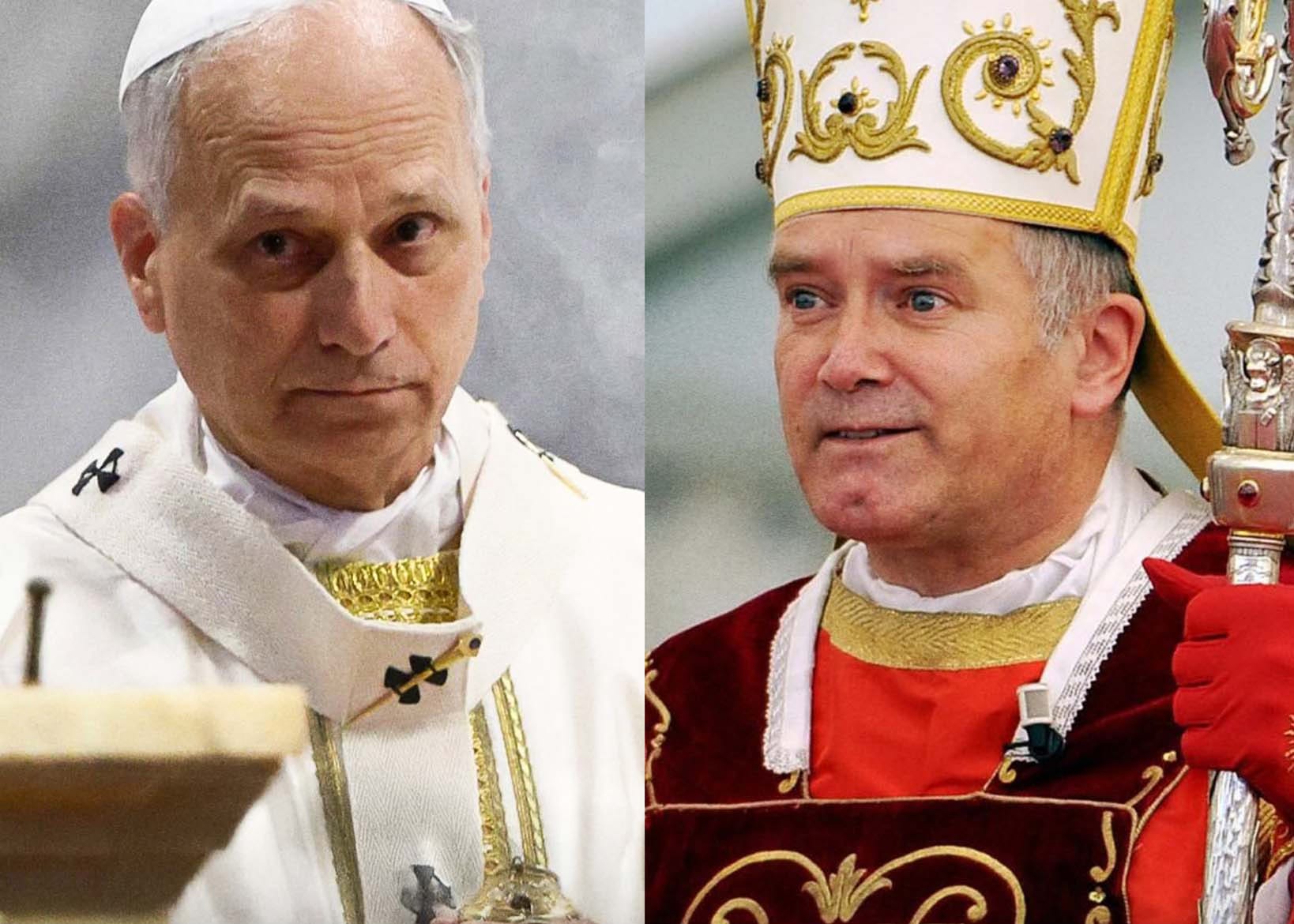
The history of the SSPX and Rome is, at its heart, a story of one institution repeatedly extending its hand while the other slaps it away. The record is as clear as it is striking.
Let’s start at the starting-line.
Sacred Tradition
The first stop in this path isn’t an overture so much as a fundamental rule—Sacred Tradition and submission to Rome. While not an overture per se, submission to the Roman Pontiff and acceptance of the magisterium of the Church is a precondition for talks and negotiations.
For roughly 50 years the SSPX has withheld full submission, arguing that elements of Vatican II and its aftermath contradict prior Tradition and therefore justify resistance to Rome.
That position is errant not because Catholics may never wrestle with difficult teachings, but because it assumes the authority to judge the Magisterium by a private theological standard. The Catholic principle runs the other direction: Sacred Tradition is authentically interpreted by the living Magisterium, not by individual clerics, societies, or movements standing in judgment over it.

Summorum Pontificum
Then came Pope Benedict XVI. In 2007, he issued Summorum Pontificum, broadening access to the Traditional Latin Mass and formally declaring that the old rite had never been abrogated.It was a gift to the universal Church, but it was also a diplomatic signal to the leadership of the SSPX.. One of the SSPX’s most persistent grievances — that the Mass of their fathers had been illicitly suppressed — was directly addressed. Benedict even wrote an accompanying letter to bishops acknowledging the SSPX situation explicitly, expressing hope for reconciliation.
“In order to experience full communion, the priests of the Communities adhering to the former usage cannot, as a matter of principle, exclude celebrating according to the new books.”
“It is true that there have been exaggerations and at times social aspects unduly linked to the attitude of the faithful attached to the ancient Latin liturgical tradition. Your charity and pastoral prudence will be an incentive and guide for improving these.”
Pope Benedict XVI, Letter to the Bishops on the occasion of the publication of the Apostolic Letter Summorum Pontificum, July 7, 2007.
The Society received the gesture coldly, without apparent enthusiasm.
Excommunications Lifted
Two years later, in January 2009, Benedict lifted the excommunications of the four bishops consecrated by Archbishop Lefebvre in 1988. This was a significant act. Excommunication is the Church’s most severe penalty. Removing it without precondition was an incredible act of conciliation. Doctrinal talks followed — serious, substantive conversations about the points of good will and reconciliation . But it led nowhere. By 2017, the talks had stalled.
Faculties Restored
Pope Francis, despite his differences in temperament from Benedict, continued extending the hand. He granted SSPX priests faculties to validly and licitly witness marriages, and he extended indefinitely the earlier permission for their confessions to be valid. He kept the door open while the SSPX remained, in the Vatican’s words, in a state of “institutional irregularity.”
Then came 2025. The SSPX, down to just two aging bishops — Bishop Bernard Fellay, 67, and Bishop Alfonso de Galarreta, 69 — faced a genuine practical problem. Superior General Father Davide Pagliarani sought an audience with the newly elected Pope Leo XIV in August 2025 to discuss the situation. Rome sent a letter in response. The SSPX declared that letter failed entirely to address their requests.
Here is where things go off the rails. Rome proposed to restart doctrinal dialogue on the condition that the SSPX postpone its planned July 1 consecrations. But the SSPX refused. After the Society’s public announcement of the consecrations, the Vatican summoned Fr. Pagliarani, and correspondence between Rome and the Society culminated in an agreement to meet in person to try to find a fruitful path of dialogue.
The SSPX’s position is that Rome’s letter failed them. But consider what Rome actually offered: an invitation to substantive doctrinal talks, at the highest dicastery level, with a specific and reasonable condition—simply wait. Don’t consecrate new bishops before we talk. The SSPX declined that condition and announced July 1 as a fait accompli.
Canon law is unambiguous:
Canon 1013:
“No Bishop is permitted to consecrate anyone as Bishop, unless it is first established that a pontifical mandate has been issued.”
The SSPX knows this. They’ve known it since 1988. The argument from necessity (that the Church’s crisis justifies defying the Pope’s explicit authority) was examined and rejected by John Paul II, who called the 1988 consecrations a schismatic act.
Rome has lifted excommunications, freed the ancient Mass, extended sacramental faculties, engaged in years of doctrinal dialogue, and offered fresh talks as recently as this year. The SSPX has responded, at each moment, by insisting that the terms are unacceptable or the response inadequate. One may be able to sympathize with their desire for bishops. But we can’t pretend the outstretched hand has come equally from both directions.
If you enjoy what you’re getting from The Forge, subscribe below for free and be a part of it, not apart from it.
There’s a related article below, don’t miss it!
Follow me on X | Instagram | TikTok | FB | YouTube
RELATED:
St. Cyprian has some words of wisdom for the SSPX
St. Cyprian, on Fidelity to Rome - The Fathers Know Best

The Society of St. Pius X (SSPX) have resurfaced. They plan to consecrate bishops without papal mandate — an act that would carry serious canonical consequences and risk deepening the rupture that has existed since 1988.
This schism is nothing short of the reasoning behind Luther's schism. It is overall pride that has allowed this to continue, despite the Vatican's obvious attempts to reconcile differences. Do I believe reform is good for the Church, especially in the context of the TLM, absolutely. The TLM is and should be a valid mass no matter where you are.
However, the SSPX has not been working in good faith, and it is purposely seeding discord within the Church. This is in direct violation of the CCC and Christ's Teaching.
I pray all SSPX congregants repent their sins and return to the full knowledge and understanding of the Church, to include the priests and leadership of the SSPX.