

From Inquisition to Inquiry: How Knowing Catholic History Builds Confidence
When I finally researched the Spanish Inquisition, I found a lot more than surprising facts. I found unbreakable confidence
This video from “Why Catholics Distrust the Church” explores a several key myths and facts about the Spanish Inquisition. Not to be missed!
When I was a young teenager getting into apologetics, every debate about Catholicism eventually hit the same wall: “The Spanish Inquisition.” It didn’t matter what the topic or subject initially was—the Eucharist, the papacy, or the Mass. Someone would say it “Inquisition!….” and everything would shift. I began to expect it, every time.
Almost without thinking, I’d say, “Yeah… we’re sorry about that. We made a big mistake there” It was automatic. Sometimes I’d even prepare apologies in my mind beforehand.
It really frustrated me. you can’t come out strong defending the faith if you feel like you have to begin by apologizing for a moral disaster in Catholic history.
“I started wondering why [the Inquisition] happened to begin with…”
The strange thing was, I never stopped to ask myself what, exactly, I was apologizing for. I knew what everybody else “knew”—the imagery, torture chambers, countless executions, millions dead—but I started wondering why this happened to begin with, and how it was permitted to occur and continue.
Why were we going through Spain forcing conversions and executing Jews and Muslims en masse? I mean who came up with that? And why did the Church permit that? Isn’t that murder? Isn’t forced conversions a bad thing?
At that moment “The Inquisition!” got my critical attention, understanding it—mastering it—became an obsession.
Fittingly I realized this in a library at school (we had a really good library!) and I started to look for books about the Spanish Inquisition. And so began a months-long journey of discovery that caught me completely by surprise
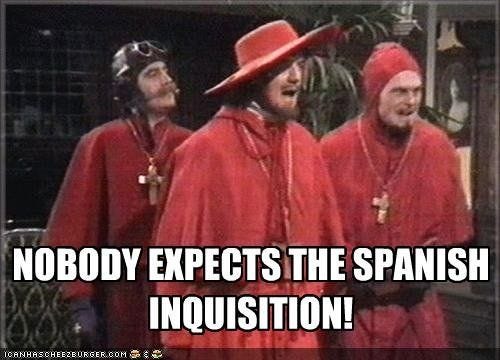
What I found genuinely surprised me. The facts were not what I thought they were. The structure, nature, and cause of the Spanish Inquisition wasn’t what I had imagined. The relationship between the Spanish Crown and Rome was more complicated than the Monty Python version I’d been carrying around in my head. The horror story I had absorbed—as everybody else had—wasn’t built on history. It was built on repetition of error and redistribution of historical fallacy. Exaggeration. Myth layered on top of myth.
That experience taught me something I’ve never forgotten. Sometimes we’re handed a story so confidently that we never think to question its foundation. We accept the framing and argue inside of it. We concede premises that were never proven. Don’t do that.
When a challenge comes — especially on big-ticket issues like the Church’s history — don’t be afraid to say, “I don’t know.” But don’t stop there. Say, “I don’t know — but I’m going to find out.”
Major topics matter in a major way. The Church’s reputation is not trivial to opposers; it’s one of the pillars they attack in order to discredit the Church, the Faith, and even God. It isn’t trivial to them, so don’t treat it as a triviality. Think. Focus. Research where you have to. And don’t be afraid that you might find verification of the horror story someone is telling you. In my experience it never plays out that way.
You don’t want to swing and miss because you were too intimidated or too lazy to check the facts. And in a digital age, getting those facts is easier than ever.
Above all, believe in the Church and be confident about her history. She is two thousand years old. If you lived to be two thousand, you would have disappointments in your record. The Church does, it’s true. But her story is not one of darkness; it is overwhelmingly glorious. Most attacks against Catholic history are not rooted in sober scholarship, they’re rooted in myth. And even where facts are present, they are often distorted beyond recognition.
The Church is the Mystical Body of Christ. She is the gateway to heaven. She is a saint-making machine. So be confident in who She is, and how amazing the Catholic Church is. Get the facts. Question the narrative when it deserves to be questioned. And stand firm in the truth.
Trust and believe, my people. Trust…and…BELIEVE!
Good message, thank you!