

Eucharist? 'Where's THAT in the Bible?' - Let me show you.
The Holy Eucharist traced from Genesis to the Early Church. "Where is that in the Bible?" Everywhere!
A lot of people, sometimes even Catholics, don't realize how deep the biblical roots of the Eucharist actually run. So on the Feast of Corpus Christi, I spent the day publishing a seven-part series tracing those roots, from Genesis to the Letters of Paul, and past Scripture into the Early Church.
I've gathered the posts here at The Forge, because what's striking about these seven moments isn't any one of them on its own. It's what happens when you line them up.
POST 1 — Melchizedek
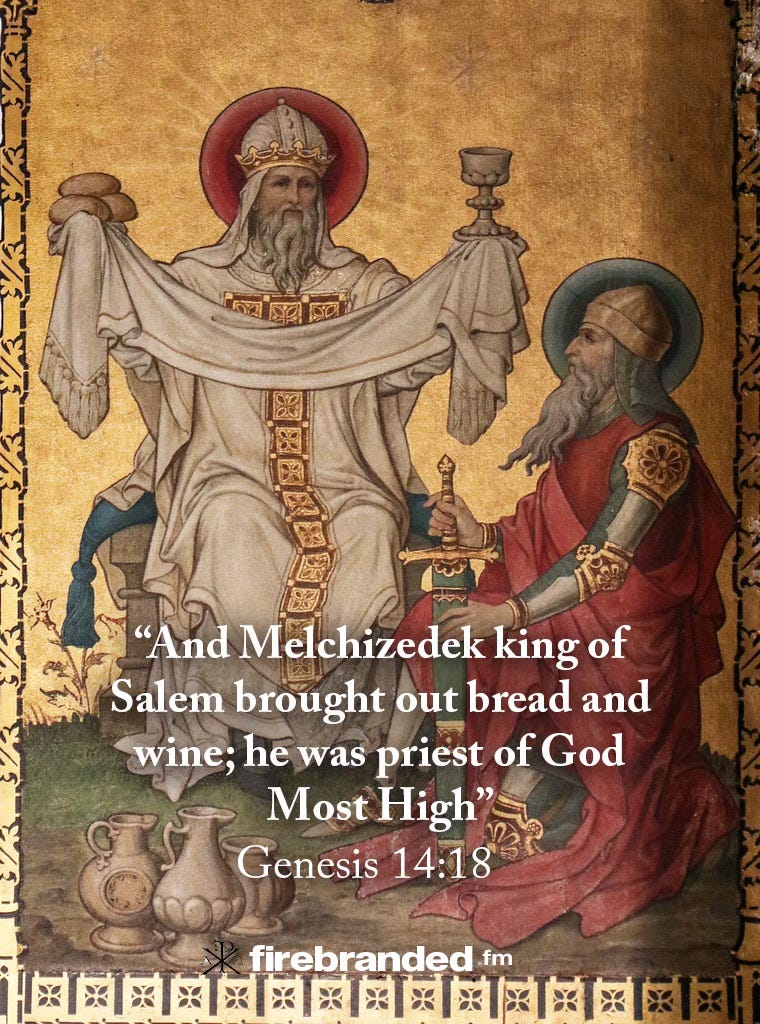
Why does a mysterious priest-king show up offering bread and wine over a thousand years before the Mass?
Scripture
“And Melchizedek king of Salem brought out bread and wine; he was priest of God Most High.”
Genesis 14:18
Explainer: Melchizedek appears for three verses and then vanishes, but the Church has always seen him as a foreshadowing of Christ. He’s a king and a priest, and his offering isn’t a slaughtered animal like the sacrifices that follow in the Old Testament…it’s bread and wine. The Letter to the Hebrews picks this up directly, calling Christ “a priest forever after the order of Melchizedek.” When you notice that the very first priestly offering Scripture highlights is bread and wine, the pattern starts early.
POST 2 — The Binding of Isaac
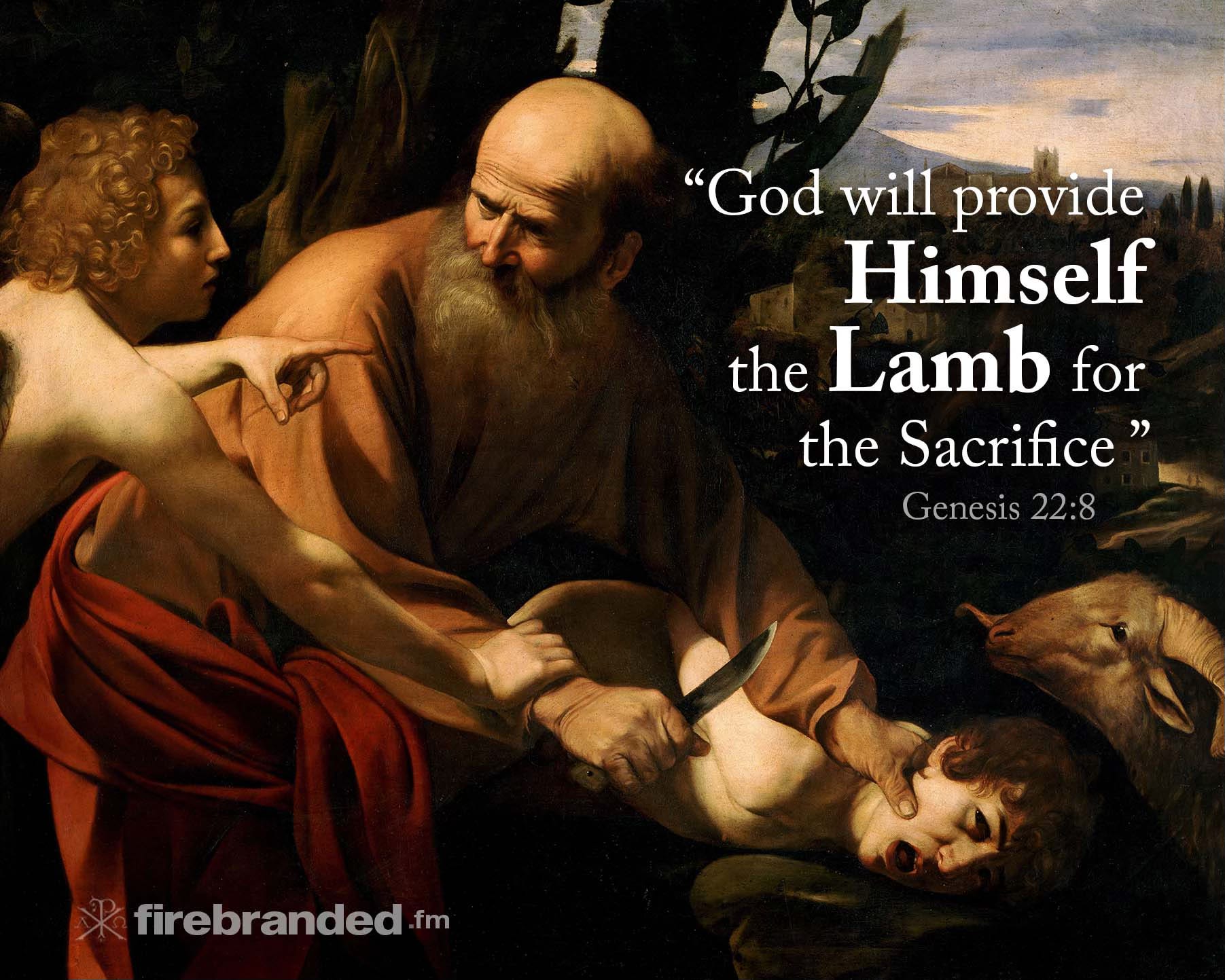
What does a father carrying his son up a mountain to be sacrificed have to do with the altar?
Scripture
“Isaac said to his father Abraham, ‘My father!’... ‘Behold, the fire and the wood; but where is the lamb for a burnt offering?’ Abraham said, ‘God will provide himself the lamb for a burnt offering, my son.’”
Genesis 22:7-8
Explainer: Isaac carries the wood for his own sacrifice up the hill, the way Christ carries his cross. Abraham’s answer, that God will provide the lamb, points past that moment to the Lamb God would eventually provide. The Eucharist is where that provision becomes ongoing: the one sacrifice, made present. This is prefigurement, not a one-to-one match, but the shape of it is hard to miss once you’ve seen it.
POST 3 — The Passover
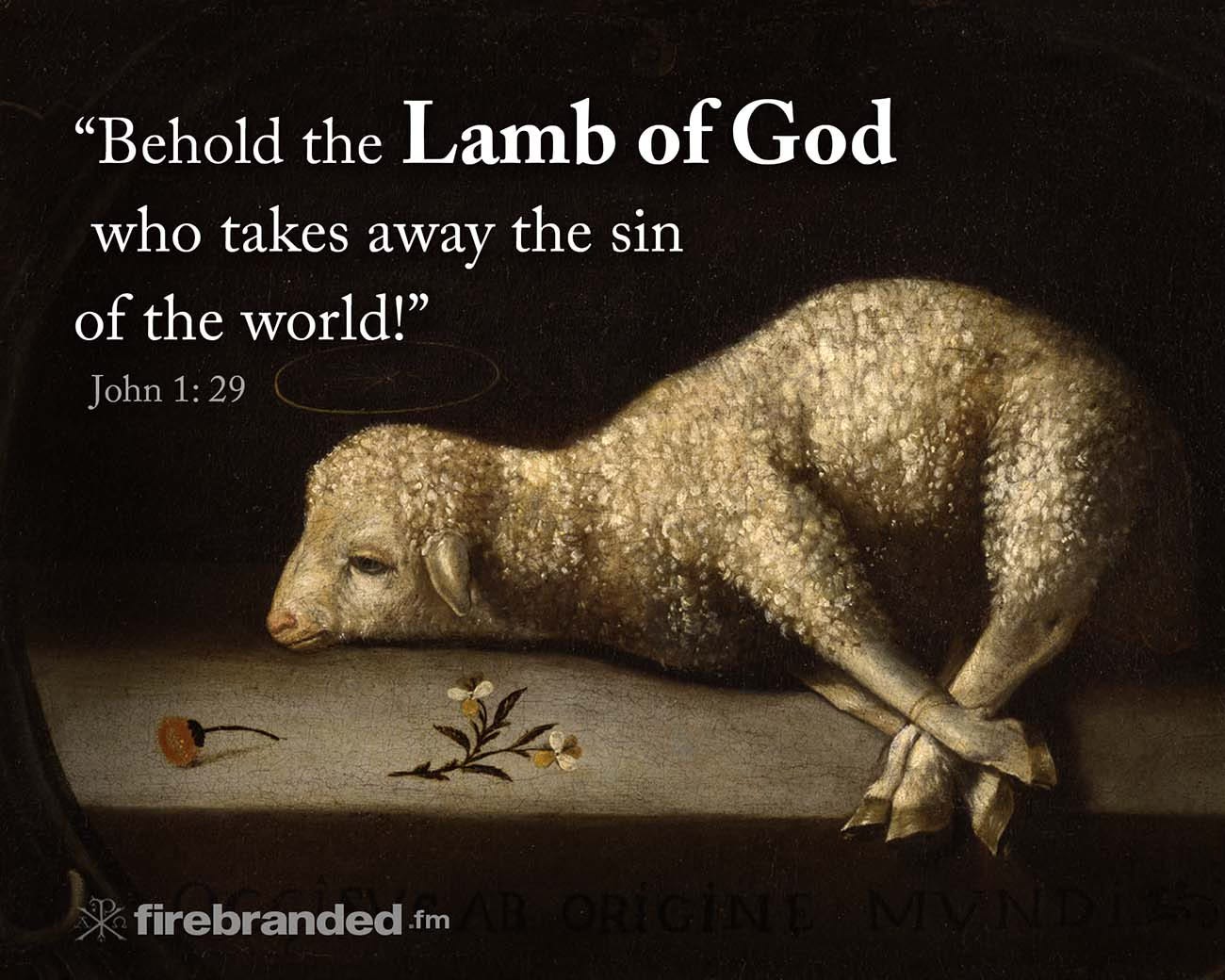
Why did God command that the Passover lamb not just be killed, but eaten?
Scripture
“They shall eat the flesh that night, roasted; with unleavened bread and bitter herbs they shall eat it.”
Exodus 12:8
Explainer: The blood of the lamb spared Israel from death, but the rescue wasn’t complete until they ate the lamb. Sacrifice and meal were one act. Hold onto that, because Jesus deliberately chose Passover for the Last Supper. He doesn’t set the lamb aside; he becomes it, and he tells his disciples to eat. The pattern God established in Egypt is the pattern he fulfills in the upper room.
POST 4 — The Bread of Life
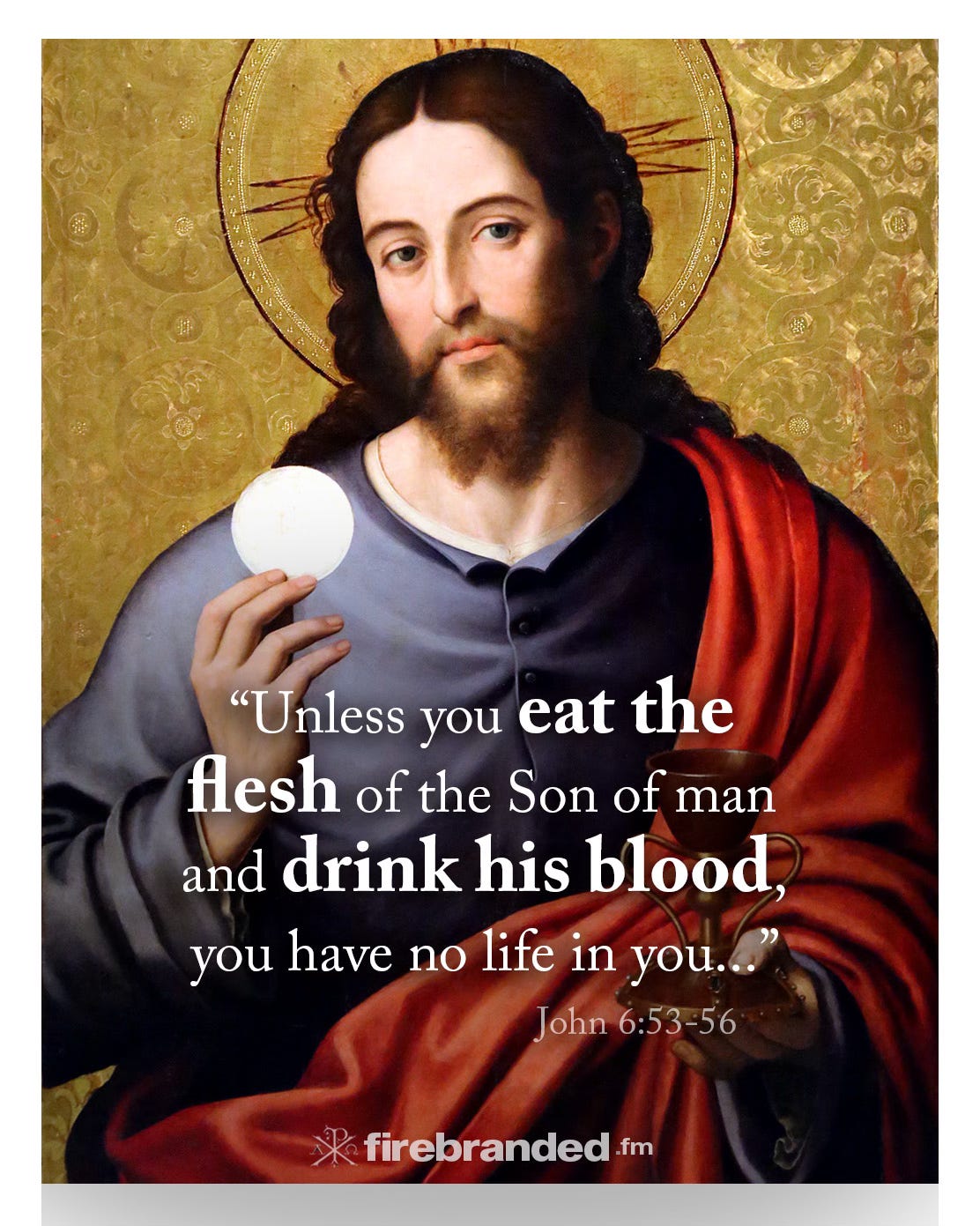
When his followers walked away over a teaching they found impossible, why didn’t Jesus call them back and clarify?
Scripture
“Truly, truly, I say to you, unless you eat the flesh of the Son of man and drink his blood, you have no life in you... For my flesh is food indeed, and my blood is drink indeed.”
John 6:53-56
Explainer: This is the moment Jesus is most explicit, and it cost him followers. When the crowd objected that they couldn’t possibly eat his flesh, he didn’t soften it or explain it away as a metaphor. He repeated it more forcefully. Many disciples left over this. If he were speaking symbolically, that was the moment to say so. He let them go instead. That tells you how literally he meant it.
POST 5 — The Last Supper
On the night before he died, what did Jesus choose to leave his Church?
Scripture
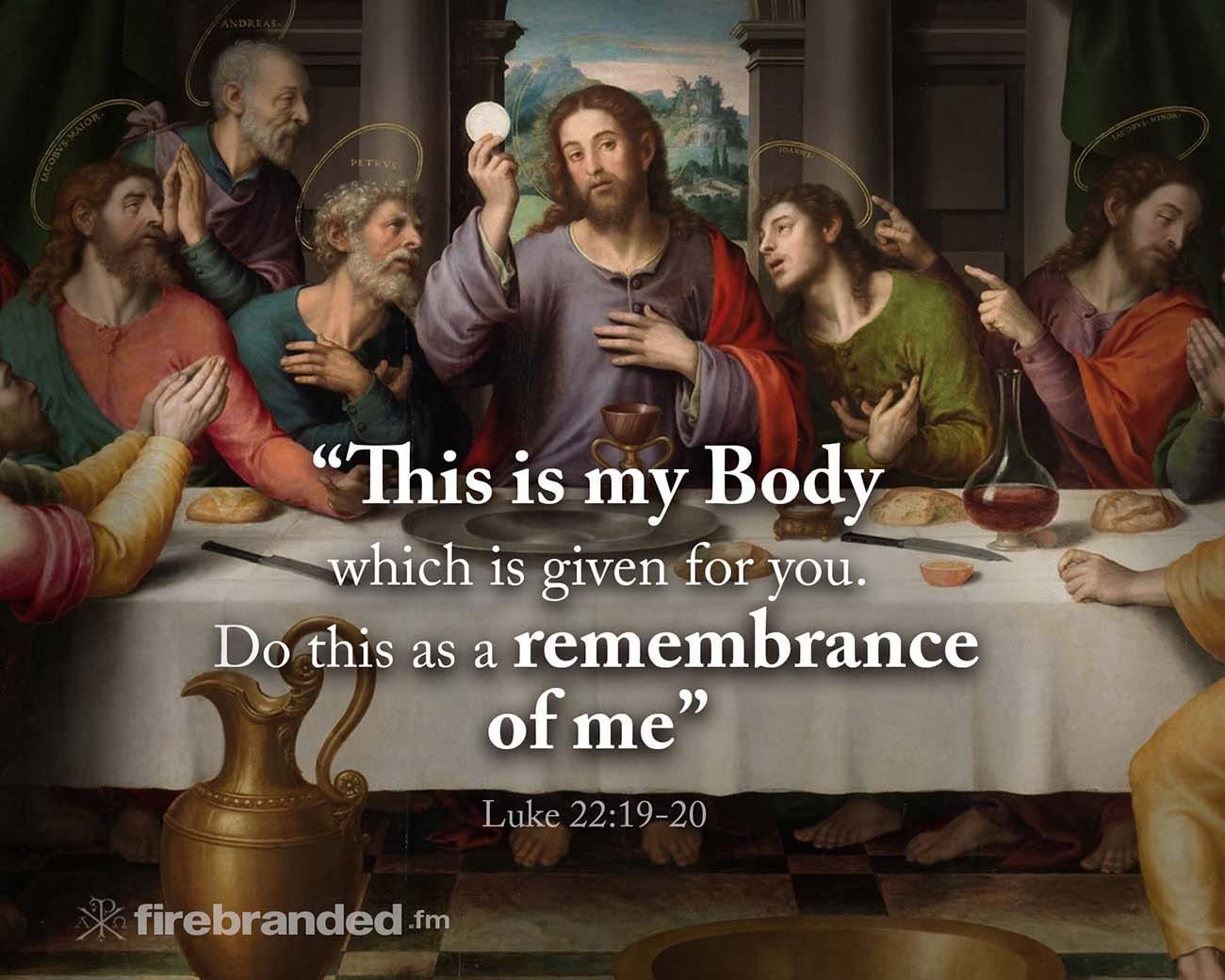
“And he took bread, and when he had given thanks he broke it and gave it to them, saying, ‘This is my body which is given for you. Do this in remembrance of me.’... ‘This cup which is poured out for you is the new covenant in my blood.’”
Luke 22:19-20
Explainer: Here’s where John 6 stops being a promise and becomes a command. “This is my body”. Not represents, not symbolizes, but is his body. And “do this in remembrance of me” isn’t a request to reminisce; it’s an instruction to continue the action. The Mass is the Church doing exactly what he told us to do, the way he told us to do it.
POST 6 — Paul Hands It On
How do we know the early Church took the Eucharist seriously, and didn’t invent it generations later?
Scripture
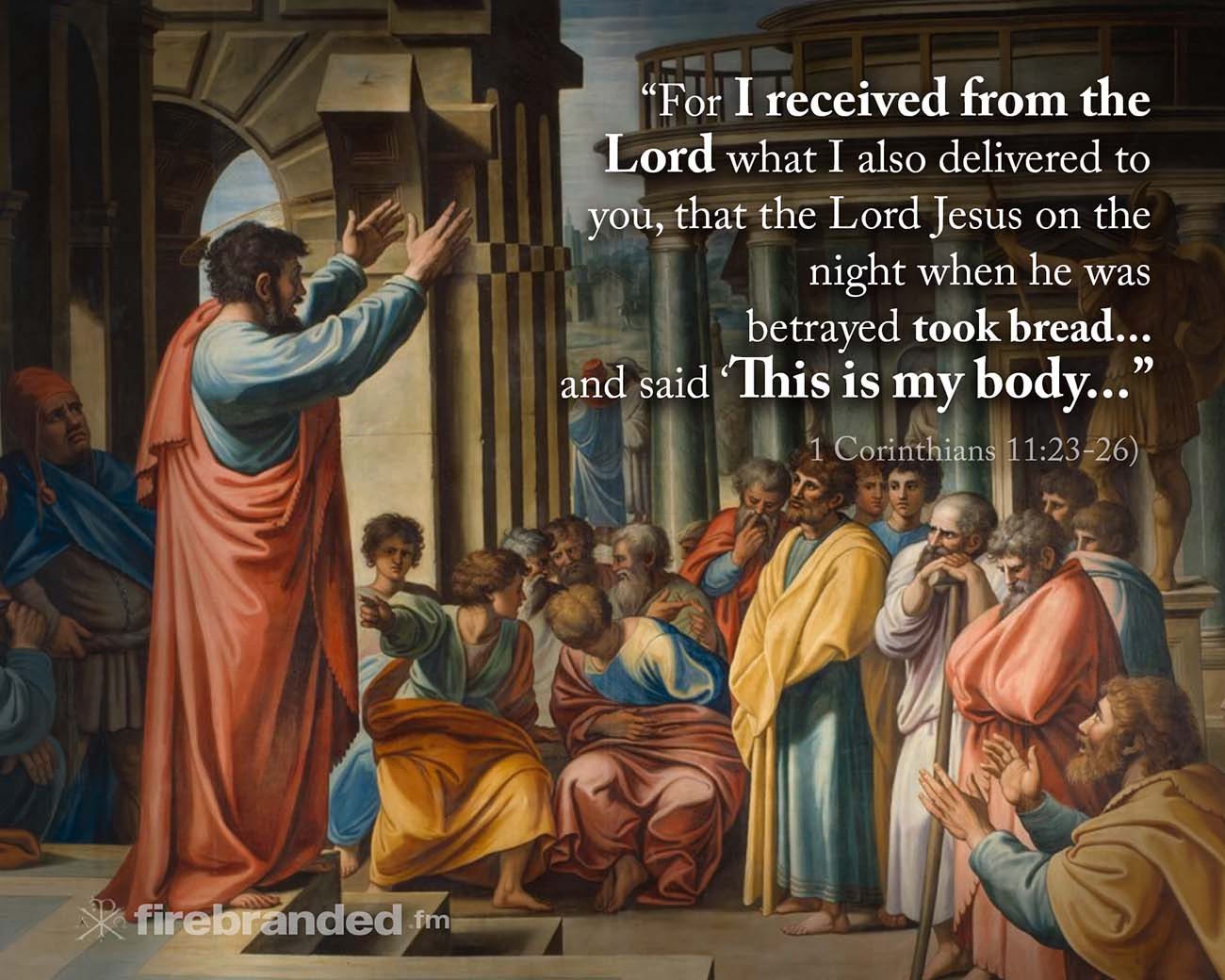
“For I received from the Lord what I also delivered to you, that the Lord Jesus on the night when he was betrayed took bread, and when he had given thanks, he broke it, and said, ‘This is my body which is for you. Do this in remembrance of me.’”
1 Corinthians 11:23-26
Explainer: Paul wrote this to Corinth around AD 55, roughly two decades after the resurrection, earlier than the Gospels. He says he’s handing on what he received, the language of carefully guarded tradition. He also warns that receiving unworthily means “profaning the body and blood of the Lord,” which makes no sense if it’s only a symbol. The belief in the real presence isn’t a later development. It’s there from the start.
POST 7 — Recognized in the Breaking of the Bread
After the resurrection, what was the moment two disciples finally recognized Jesus?
Scripture
“When he was at table with them, he took the bread and blessed, and broke it, and gave it to them. And their eyes were opened and they recognized him; and he vanished out of their sight.”
Luke 24:30-31
Explainer: Two disciples walked miles with the risen Christ and didn’t know him. Not while he opened the Scriptures to them, but in the breaking of the bread. Luke is telling his readers something about where Christ is found. And it’s exactly what the early Church practiced. Justin Martyr, writing around AD 155, explained plainly that Christians do not receive the Eucharist as ordinary bread and drink, but as the flesh and blood of Jesus who became incarnate (First Apology, ch. 66). The recognition the disciples had on the road is the one the Church has had ever since.
Early Church
The Earliest Description of the Mass
If the Real Presence were a later invention, why is a Christian describing it in detail barely a century after the resurrection?
Scripture (well, not Scripture)
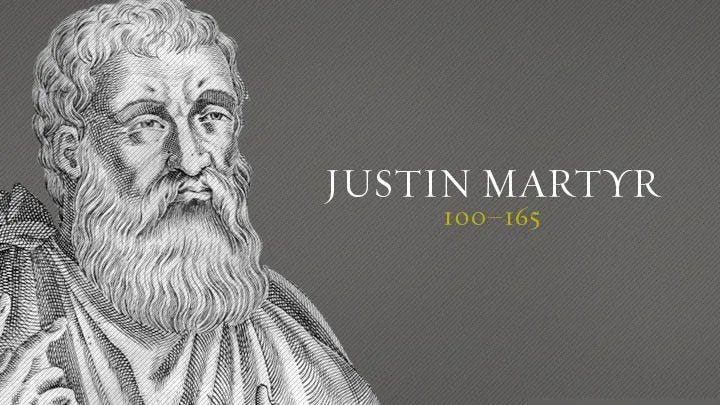
"For not as common bread and common drink do we receive these; but in like manner as Jesus Christ our Saviour, having been made flesh by the Word of God, had both flesh and blood for our salvation, so likewise have we been taught that the food which is blessed by the prayer of His word, and from which our blood and flesh by transmutation are nourished, is the flesh and blood of that Jesus who was made flesh."
Justin Martyr, First Apology, ch. 66, c. AD 155
Justin wrote that the bread and drink of the Eucharist are not received as common bread and common drink, but as the flesh and blood of Jesus Christ who was made flesh.
Explainer: Justin was writing to a pagan Roman emperor, explaining what Christians actually did and believed—not arguing theology with other Christians, just describing the practice as a settled fact. And he describes the Mass in a way any Catholic would recognize: readings, a homily, prayers, the offering of bread and wine, the people responding “Amen.” He says plainly that this is no longer ordinary bread. This is roughly AD 155, within living memory of people who’d known the apostles’ own disciples. The belief in the Real Presence wasn’t pieced together over centuries. It was already there, already assumed, already being explained to outsiders as simply what Christians believe.
BONUS
There are a few more I could include but here’s just one bonus for you
A Participation in the Blood of Christ
When Paul wanted to explain what actually happens when we receive Communion, what word did he reach for?
Scripture
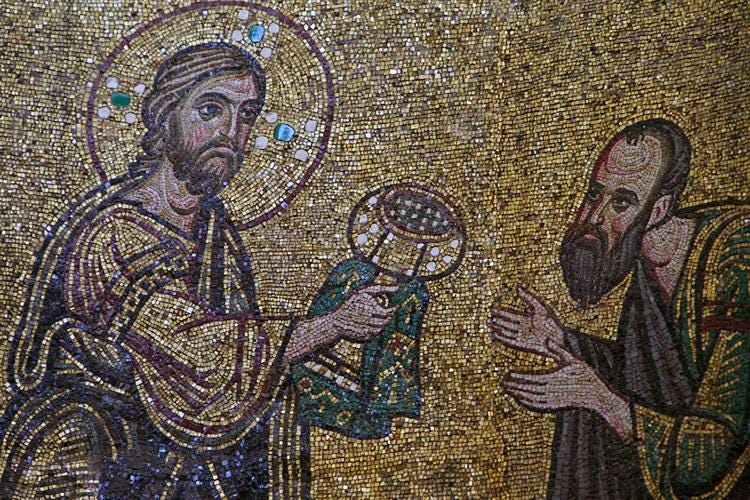
“The cup of blessing which we bless, is it not a participation in the blood of Christ? The bread which we break, is it not a participation in the body of Christ?”
1 Corinthians 10:16
Explainer: Paul frames it as two rhetorical questions, expecting his readers to already agree. The word translated “participation” is koinonia—communion, a real sharing in something, not a symbol pointing at it from a distance. He’s not saying the bread reminds us of Christ’s body; he’s saying that in receiving it we actually share in it. This is the same Paul who, a chapter later, warns that receiving unworthily profanes the body and blood of the Lord. Both passages only make sense if there’s something really present to participate in.
If you enjoyed this, please share it, and help The Forge to grow. God bless you all