

Catholic Men's Group Hits Road Block at Pride Parade — and it wasn't from the Parade-goers
A faithful Catholic men's group was kept off the Cathedral steps during Pride weekend. The reasons were fair — but the instinct behind them points to a deeper problem in the Church.
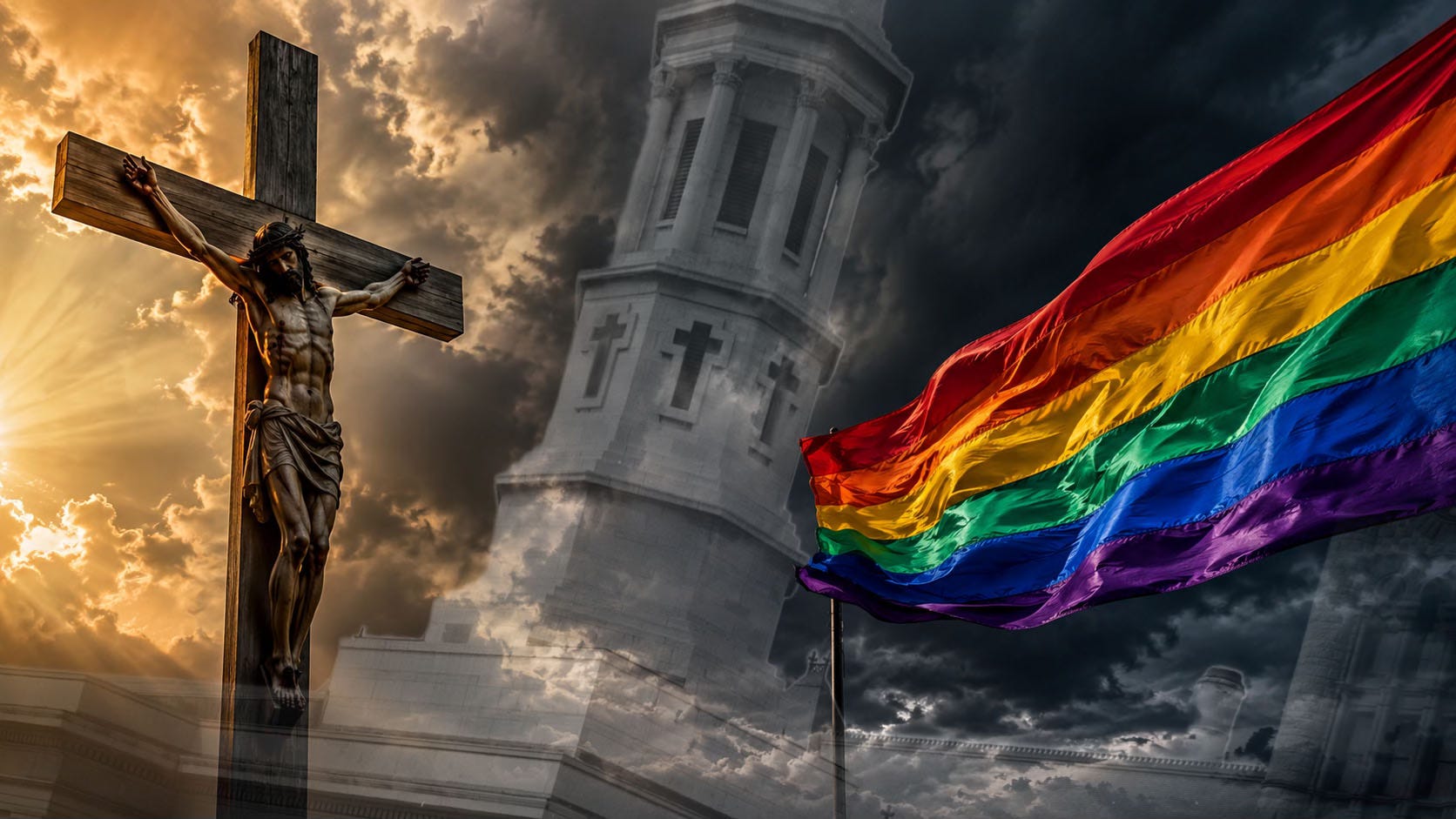
“I have become all things to all men, that I might by all means save some.”
1 Corinthians 9:22
I’ve said for years that the Church has to think outside of its own box. In our modern age, because human culture is night and day different from what it was even in our parents’ generation, old ways of thinking and old ways of operating need to change. And for 2,000 years, that has actually been the evangelistic DNA of the Church. The Church adapts so that she can evangelize. That’s what Paul was talking about in 1 Corinthians 9:22. The Church (through her ministers, lay or clerical) doesn’t change the message, but she adapts how she brings it into the world.
But as the world has changed so much, the Church now has to adapt just as much, and very quickly. And she needs to rely on her children to help her do it.
Sometimes local churches and parishes do this well—I know of several. But more often than not, the Church resists shifts in her own paradigms and, for various reasons, sometimes legitimate, resists supporting the laypeople willing to do the work. That’s what happened here.
This is not a hit piece on the archdiocese or on a lay apostolate. These are the facts, and my balanced assessment of what we’re seeing. By the end of this article, you’ll see it all goes to my point.
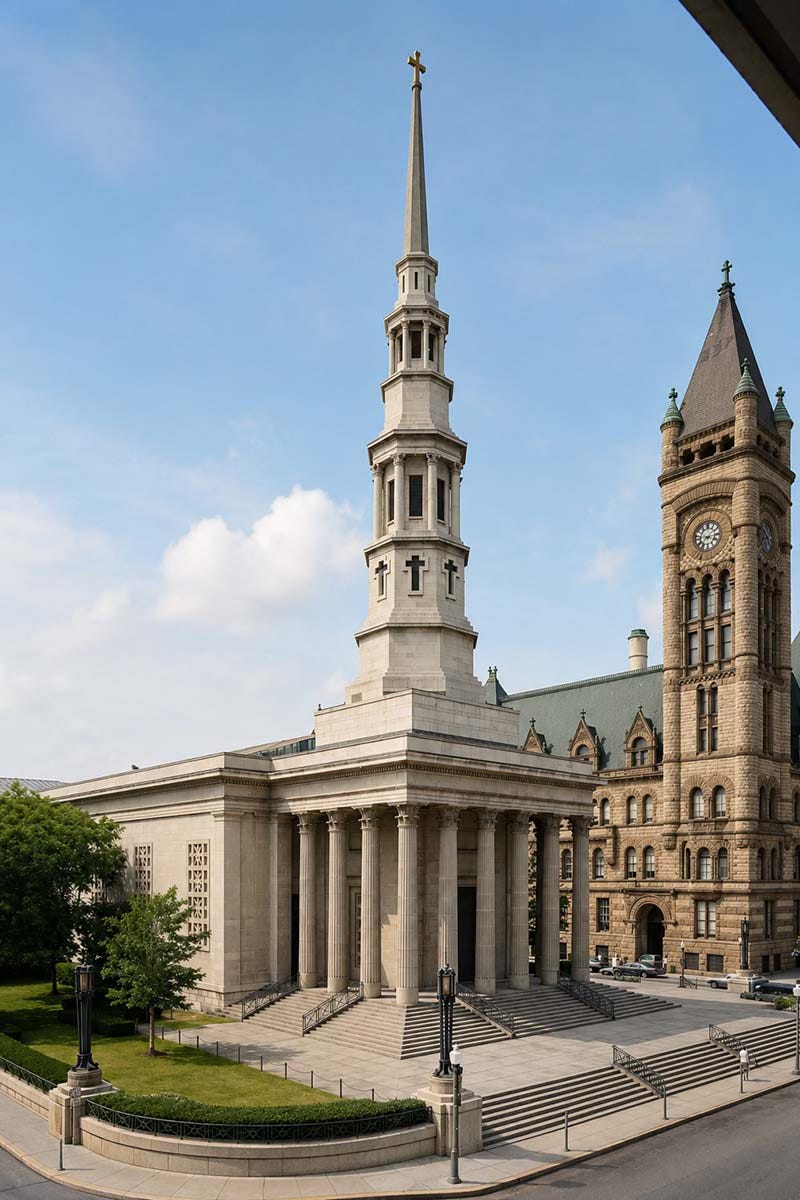
For the past few years, a Catholic men’s group in Cincinnati called “Christ the King”has gathered to pray a public reparation Rosary on the steps of the Cathedral Basilica of St. Peter during the city’s Pride weekend. The cathedral sits at 8th and Plum, and the parade steps off right at the southwest corner of the same block, at 7th and Central.

The group’s approach has been consistent: It’s only men participating, because the parade brings public immodesty that the group would rather not expose women and children to. Smart! Also they use bullhorns, because the parade is loud enough that you need them to be heard; and prayer, not confrontation. By their account, they’ve done this for years without incident.
The prior Archbishop never expressed concern about it, and the, then new Archbishop Casey didn’t express an issue with it last year. No run-ins with paraders, no trouble parking at the cathedral.
"This is the first year that we've been turned away from the cathedral steps."
This year was different. The head of the group, who posts on X under the name “Catholic_State,” says it was turned away from the cathedral steps for the first time in its history doing this.
Catholic_State, who runs the account, put it bluntly: The rector of the Cathedral, Father Jan Schmidt, said that they couldn’t pray on the steps because he wanted to remain “neutral” toward the Pride parade next door. The group leader’s response was just as blunt — Scripture, the Fathers, and the Catechism don’t permit a bishop to be neutral toward sin.
That’s a serious charge, and it deserves a careful look rather than a reflexive one. So I asked him directly whether he had anything in writing from the archdiocese. He did. And once you read it, the picture gets more complicated than the original post suggests.
Of Note: Catholic_State has said this message came from the Archbishop, through the rector of the Cathedral. Without evidence that this was the actual chain of delivery, I can’t say that that was the case. It could have been, but what we know factually is only that the message was conveyed by the rector. It’s possible the Archbishop knows nothing about it, and it’s also possible the archbishop was in fact communicating through the Rector. I have witnessed both scenarios, and both are plausible here.
What the Archdiocese Actually Said
The Archdiocese of Cincinnati’s Director of Communication and Evangelization, Mike Schafer, responded with a written statement explaining the decision.
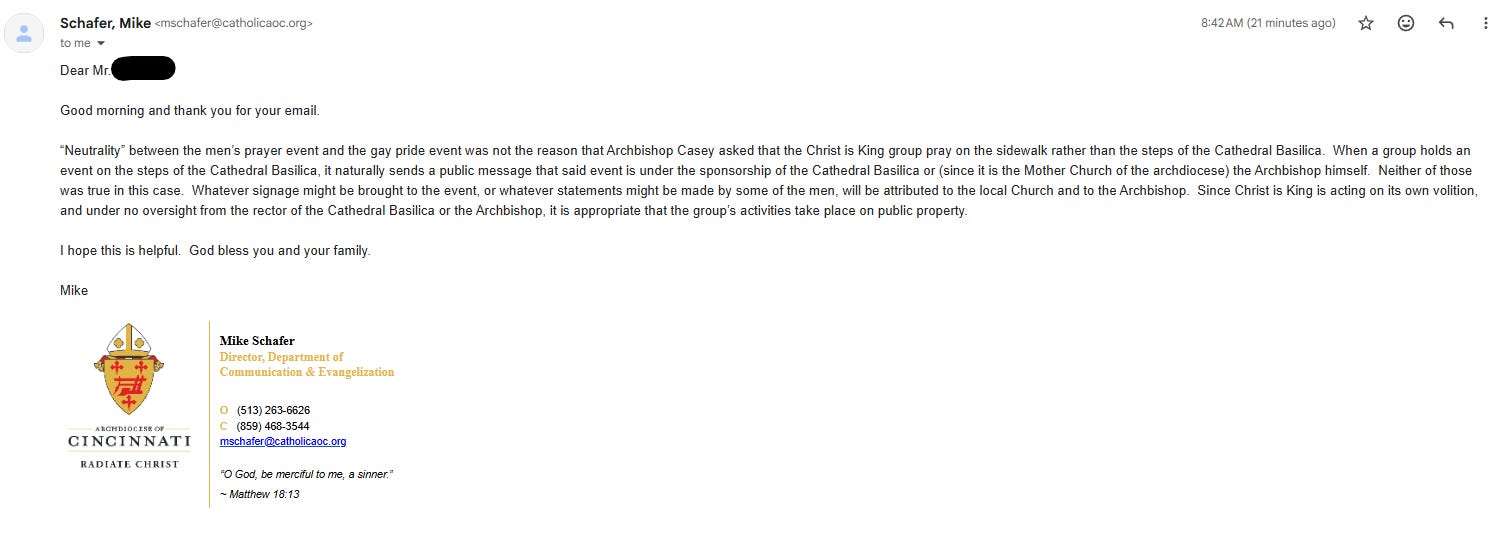
According to Schafer, “neutrality” toward the Pride event was not the reason the group was asked to pray on the sidewalk rather than on the cathedral steps. The reasoning was about sponsorship and accountability.
When a group holds an event on the steps of the Cathedral Basilica, that placement naturally sends a public message: the event is perceived and understood to be under the sponsorship of, and sanctioned the cathedral or the Archdiocese. Whatever signage gets brought, whatever any participant might say or do, all of it would be attributed to the local Church and to the Archbishop.
The “Christ is King” group was acting on its own initiative, with no oversight from the rector or the Archbishop. Given that, the archdiocese held it was appropriate for the group’s activity to take place on the sidewalk (public property) instead.
I have to say, I agree with that decision. The concern is real. If you have no oversight over an event held in your name, you’ve opened yourself to a genuine problem of accountability, liability, or both.
Imagine someone shouting “God hates f*gs!” into a megaphone on the steps of the Cathedral? Imagine a fight or riot breaks out. Imagine during that fight someone falls on the steps of the Cathedral, fractures their skull, or dies. Imagine the press—and the lawsuits. Any one of those potential episodes in isolation would already be bad for a diocese. All of them combined, or in succession would be a diocese’ worst nightmare
For all we know, everyone in this group is a saint who would never conceive of doing or saying anything atrocious. But without oversight, the Archdiocese can’t be assured of that.
A bishop is responsible for what appears to carry his sponsorship, and “we didn’t organize it but it happened on our steps” is not a position any institution can comfortably defend.
I’d add one thing the group itself acknowledges: authority over the cathedral steps belongs to the Archbishop. As Catholic_State put it, whether they’re allowed to pray there is a matter of internal church discipline, not a First Amendment question—it’s the Archbishop’s call to make.
Catholic_State Has a Valid Point
Here is where I lean more supportive of the group.
The archdiocese’s reasoning is valid and entirely common in the Church. But…that’s kind of the problem—it’s common in the Church.
The men who wanted to pray weren’t troublemakers. By their own account, they’re men who go to confession, go to Mass, and want nothing more than to see the archdiocese thrive. They wanted to publicly witness their faith during a weekend when that witness would have really meant something. The right answer to a liability concern isn’t simply to send them to the sidewalk. The right answer is for the archdiocese to do something like what this wanted to do, or to let them do it on the cathedral steps in a way that’s properly sanctioned, supervised, and structured to minimize any real risk.
In other words, the solution to “we can’t endorse an event we don’t control” is to bring the event under appropriate control, not to push it off the property. The first option requires the Church to lean in. The second only requires her to step back. She chose to step back, and stepping back is the usual reflex.
It really has to stop!
This is part of a larger pattern, and it’s a concern I have with a lot of the Church’s institutional life. The Church is full of people who want to help her think and act outside of her own familiar box. Some of those people may be well-meaning trouble-makers, that’s just true. But many of them are solid, faithful Catholics with real gifts that could serve the Church’s mission. The Church is generally not disposed to openly support them, because it goes too far outside of “the box” of old paradigms for the Church.
It’s old-school ecclesial thinking, the kind that treats lay initiative as a risk to be managed rather than an asset to be directed. It’s an instinct that needs to change, and fast. Frankly, it needed to change fifty years ago.
The Real Issue
So this isn’t really a story about one archbishop and one weekend. The decision in Cincinnati was defensible on its own terms. The trouble is that “defensible on its own terms” is exactly how the Church keeps arriving at the safer, smaller, more cautious outcome—every time, by default.
If the Church does not learn some new tricks, she may have to accept a new “sacred tradition”—that of perpetually empty pews, seminaries, and secularists redefining the Gospel in place of a Church that does not boldly proclaim it Herself.
Stay fired up, my friends. God wills it. And may He be with you all.
We had a similar issue when trying to start a Veterans support group in our parish. The scenario was that our proposed group would set up a table at the local VA, offering coffee, donuts, Bibles, and conversation. This was great and I am part of another group who does this. We would not offer medical advice, simply support and conversation. But, one administrator asked, what if a Veteran with suicidal tendencies came out to talk and, instead of guiding him or her to qualified emergency personnel, our volunteer said, "If that were me, I'd just kill myself." This, of course, is horrible and completely off the rails; we would never condone this. But...we also knew potential volunteers who would say exactly this kind of thing. Would you be willing to risk bringing that horror onto the Veteran's family or your parish? When they turned me down, I was very disappointed but knew that they were right to protect the parish and the diocese.
Thank you really coming to a growing opportunity with this. Ignoring the legal challenges the church has to deal with but also recognizing the need for more bold actions lead by laity. Balanced and hope more communication from both sides before hand will help