

Branding a Pope an Idolater Needs More 'Evidence' than a Photograph
A picture doesn't always speak a thousand words. Sometimes it's mute. A Serious Charge Against Pope Leo (Then Fr. Prevost) Requires Better Proof than a Fuzzy Picture
This article was sparked by my latest episode, available here
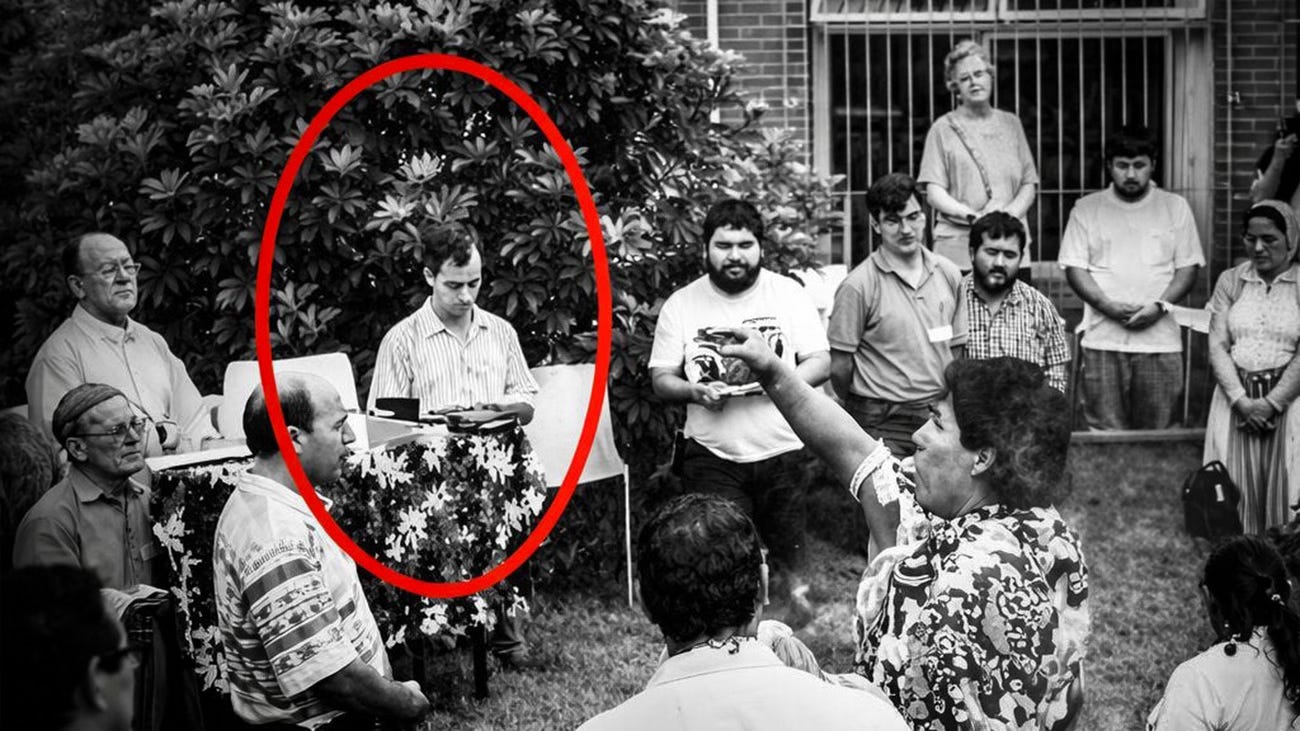
A decades-old photograph is making the rounds online, cited as evidence that Pope Leo XIV once took part in a Pachamama ritual during his missionary years. Did the future Pope Leo worship the pagan goddess Pachamama. The evidence doesn’t tell us. And yet the rumors are spread with confidence and boldness. Let’s analyze the evidence and see what it does and doesn’t tell us.
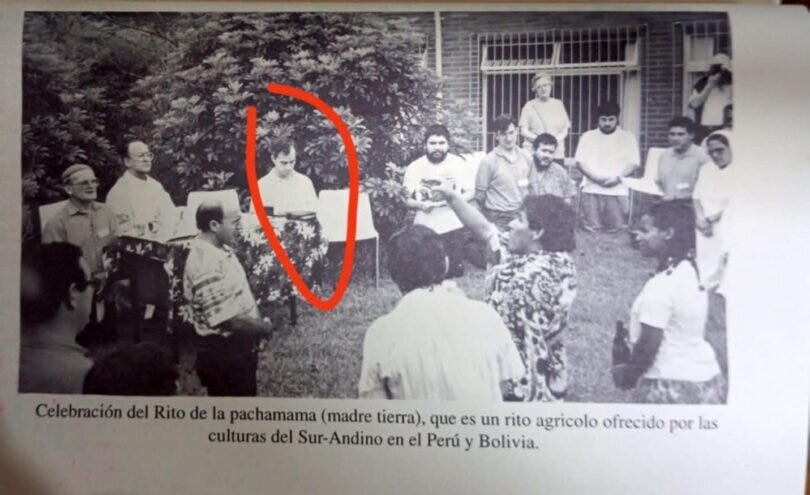
The evidence offered is a photograph from a 1995 theological symposium showing participants kneeling in a circle around ritual objects. From that image, some commentators conclude that the future pope engaged in idolatry.
That conclusion reaches further than the evidence can carry.
Imperfect Picture
A photograph captures a moment, not a person’s intention or the nuances of the setting. It shows posture, setting, and objects, but it does not reveal what each participant believed or intended, or was even there for. Moving from “kneeling in a cultural context” to “worshiping an idol” requires additional proof that has not been presented, it has only been suggested—and without a reasoned presentation.
Would you believe someone who questioned your mother’s virtue? Your fathers? Wouldn’t you demand better evidence than a suggestive and someone’s interpretation of it?
Even if the symposium materials describe the moment as a “Pachamama rite,” (it is not described as worship) that alone doesn’t establish personal devotion, motive or intent. It’s very common for missionary clergy to attended cultural events as observers, educators, or participants in dialogue. Being present at a demonstration of indigenous practice is not automatically the same thing as religious assent.
PAID MEMBERS: At the end of this article you’ll find an “Afterthoughts” segment spotlighting some missionary saints who got caught up in similar situations.
The Church Speaks
A gesture by itself is ambiguous. Kneeling can express worship, but it can also reflect participation in a structured activity, following directions, or simple courtesy within a hosted event. Moral theology makes an important distinction here: an external action is not identical with an interior act of religion (CCC 1750–1752, and Aquinas’ Summa Theologiae II–II, q.81, a.7.) Idolatry is not defined by posture alone, but by intention.
There is also the problem of hindsight. The Pachamama controversy associated with the Amazon Synod didn’t erupt until decades later in 2019. Looking back at a 1995 photograph through the lens of later disputes risks injecting meanings into (or reading meaning out of) the image that may not have been understood in the same way at the time.
The evidence itself is also thin. Is that the future Pope Leo in the photograph? Look again


It could be Fr. Robert Prevost. It may not be. He also appears to be seated, not kneeling, as is the man to his right. If you zoomed in on that image before being told it was a young Pope Leo, would you have spotted it? Let’s look at another.
The man in those photos could all very well be Fr. Prevost/Pope Leo. But the evidence isn’t at all strong enough to establish that claim.
One Last Thing
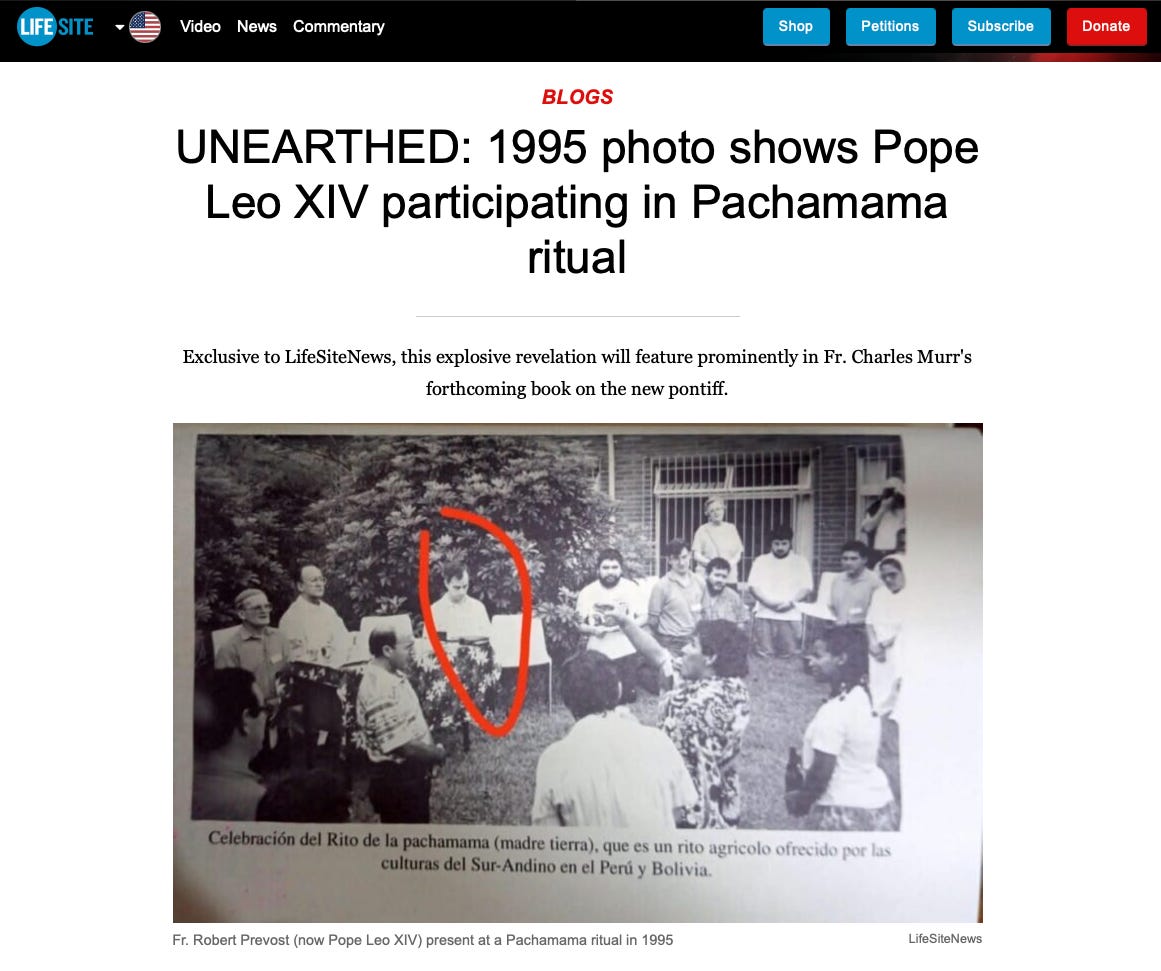
The headline says Pope Leo is participating in a ritual. The caption in the editorial says he’s merely “present”. The inconsistency is bad journalism. The false statement in the headline is bad journalism (the photo doesn’t show intent, or action, so we can’t say he’s “participating”). Placing it in a section called “Blog” is bad journalism, because it inherits the perceived authority of a news brand, without the ethical and legal requirements that news outlets are bound to. This whole story is a con, from its format, to its composition, to its framing and delivery.
The identification of the young man as Robert Prevost rests largely on visual comparison and projections circulated online rather than authoritative confirmation from some official records or firsthand testimony. For a charge as serious as idolatry, vague resemblance is not good enough, and a responsible journalist (or “catholic podcaster”) would have let it go. You have to wonder why they didn’t.
I’m not saying that the event is beyond criticism, and I’m not saying it rules out the possibility of irresponsible inculturation practices that were not uncommon in parts of Latin America during that era. But the current evidence doesn’t justify the confident claim that the future pope “worshiped an idol.”
Serious accusations require serious proof. Right now, the photograph raises questions. It does not answer them.
Don’t forget to check out the episode that sparked this article
🤔 Afterthoughts
Missionaries and Misunderstanding - How some saints used inculturation in ways that that might be considered “scandalous”
Paid Members Only. Hey, it’s five bucks a month, what’s holding you back? Go for it!
